
Wood Fencing in Orlando, FL
All County Fence is a family-owned Orlando fence company, and wood is still the material we install most. It is the most affordable way to get real privacy, it can be built to almost any layout, and a well-built wood fence suits Central Florida neighborhoods in a way few other materials do. The difference between a wood fence that lasts and one that leans in three years comes down to species, post setting, and layout, so this page covers all three rather than just the look.

Wood in the Central Florida Climate, Honestly
Wood asks more of this climate than any other fencing material, and it is worth saying so plainly. Orlando gives a wood fence heat, heavy summer rain, high humidity, strong UV, and subterranean termites. What that means in practice:
- Rot starts at the ground, not the top. Posts fail before panels do. Ground-contact rated pressure-treated lumber below grade is not optional here.
- Termites are a genuine Central Florida factor. Pressure treatment is the defense, which is why untreated lumber never goes underground.
- UV greys the surface. Every wood fence silvers over time. That is cosmetic rather than structural, and sealing slows it if you want to hold the colour.
- Sandy soil is a mixed blessing. It drains well, which helps rot, but it grips a post less than clay, which is why footing depth and concrete matter more here than in most of the country.
- Wood moves in its first season. Boards shrink slightly as they dry. Board-on-board and shadowbox layouts are designed to absorb that movement without opening gaps.
If you want the wood look with none of the maintenance, compare it against PVC vinyl fencing, which holds its colour and never needs sealing.
Wood Fence Styles We Build
Most people picture a picket fence when they think of wood, but the style you choose changes privacy, airflow, cost, and how the fence ages. These are the layouts we build most often around Orlando.
Board-on-Board
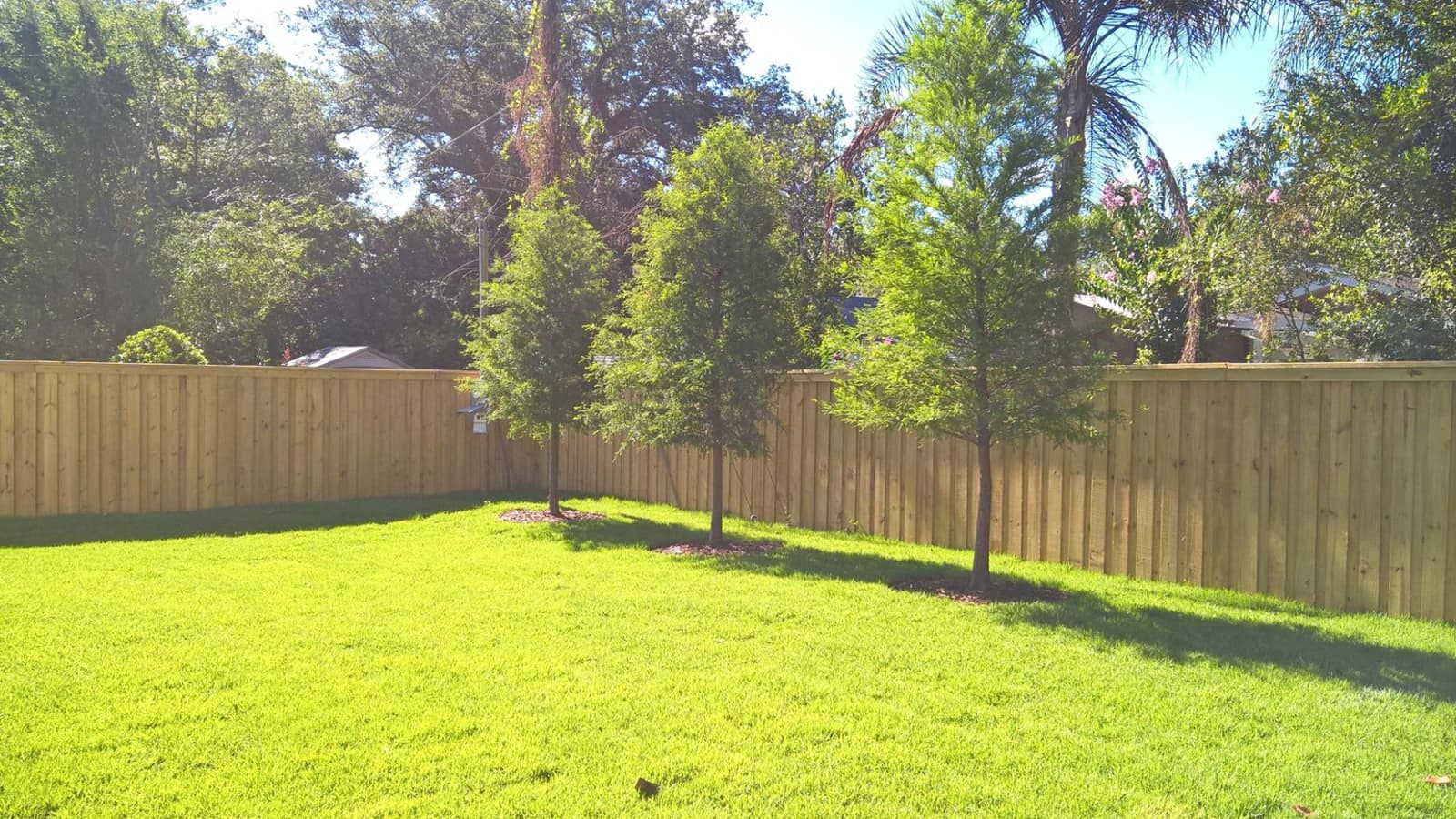
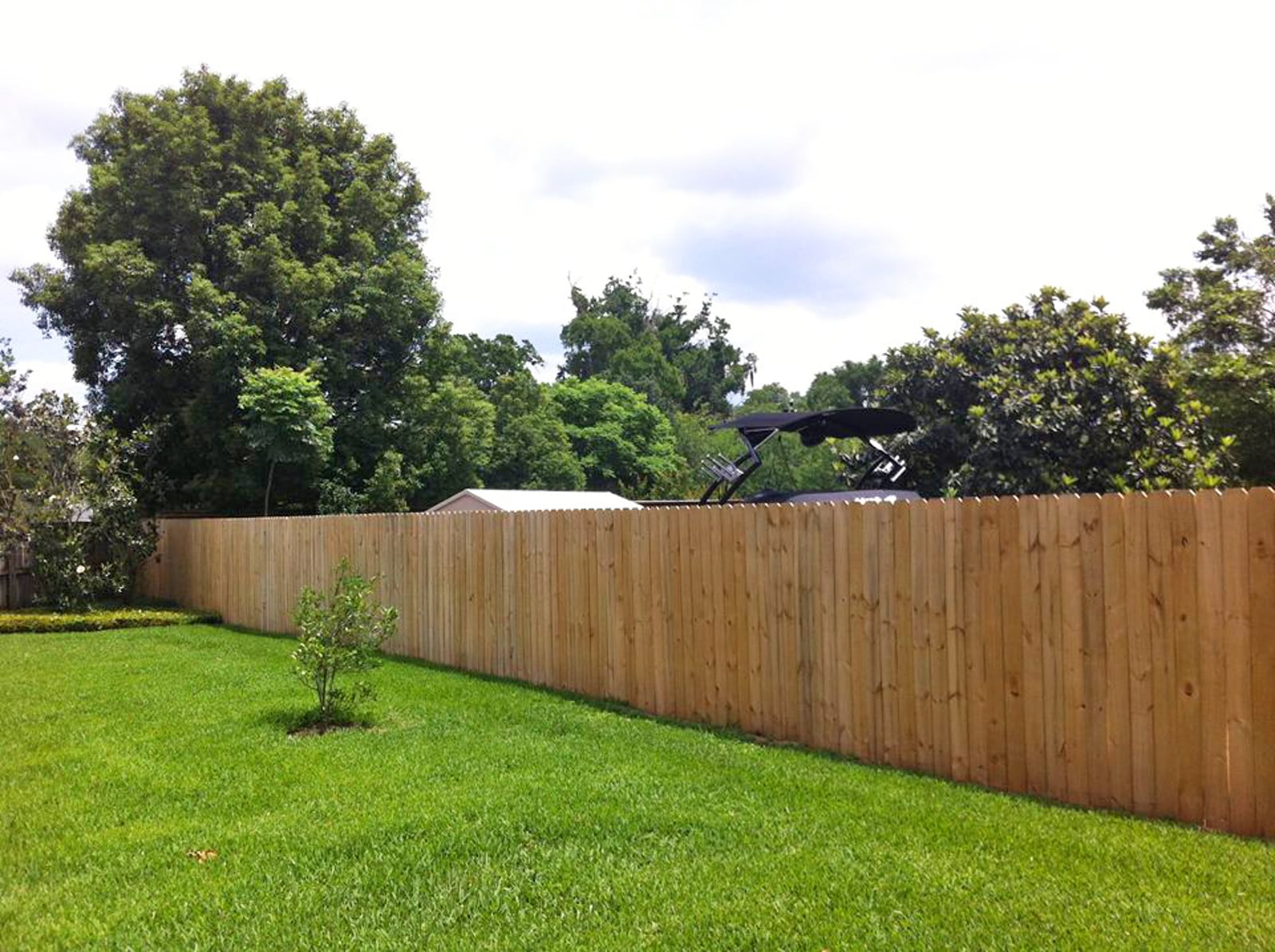
Vertical boards overlap their neighbours by roughly an inch, so there is no line of sight through the fence and no gap when the wood shrinks. It is the most private wood fence and it looks the same finished from both sides. It uses more lumber than a stockade, so it costs more.
Shadowbox
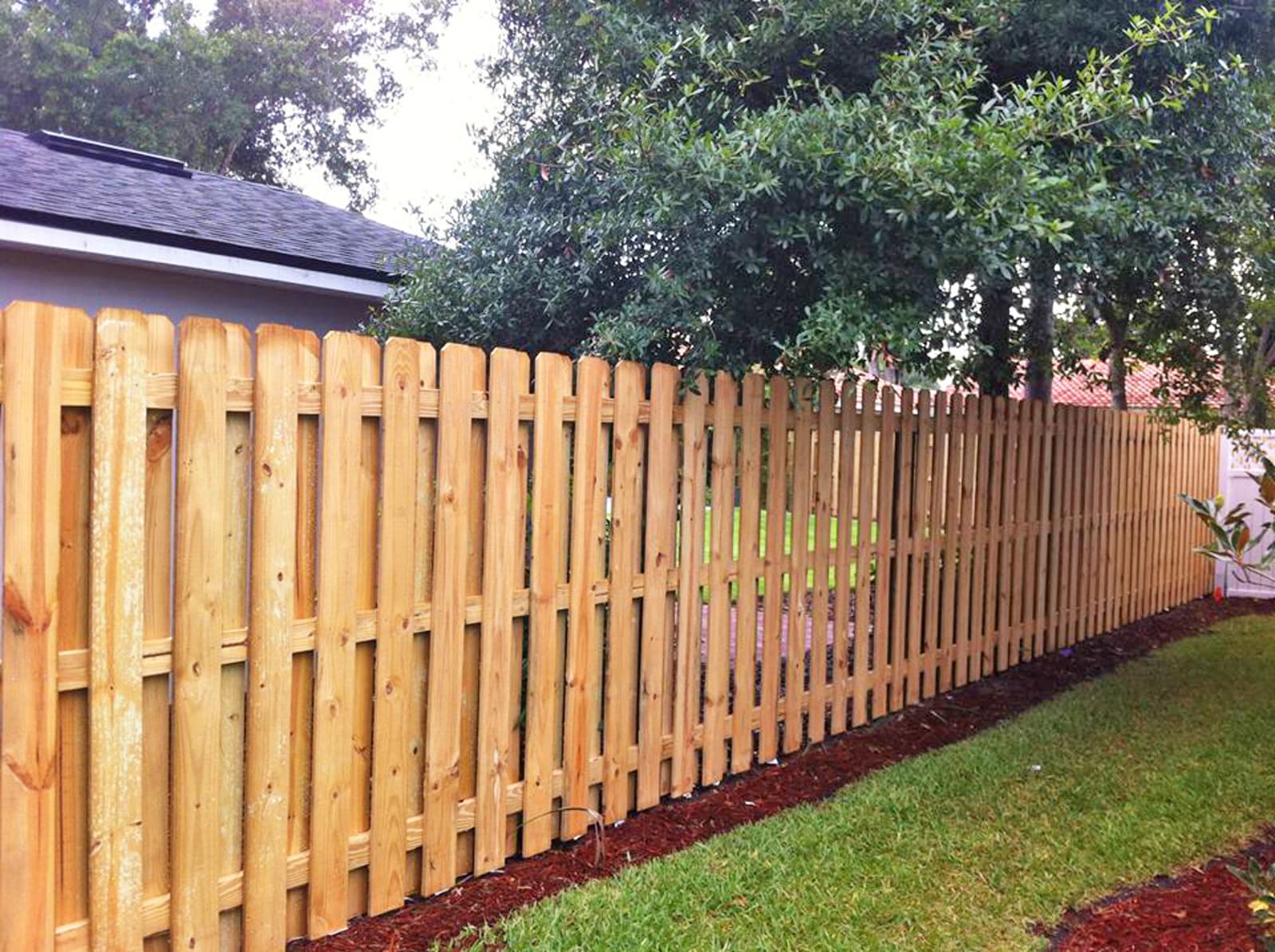
Also called a good-neighbour fence. Boards alternate between the two sides of the rails, giving a finished face to both properties and letting wind pass through. Semi-private rather than fully private, and a common choice where an HOA wants the same appearance from the street and the neighbour.
Stockade
Pickets butted tight against each other on one side of the rails, usually with dog-ear or gothic tops. The most economical way to enclose a back yard, and the most common privacy fence in Central Florida.
Solid Privacy Panel
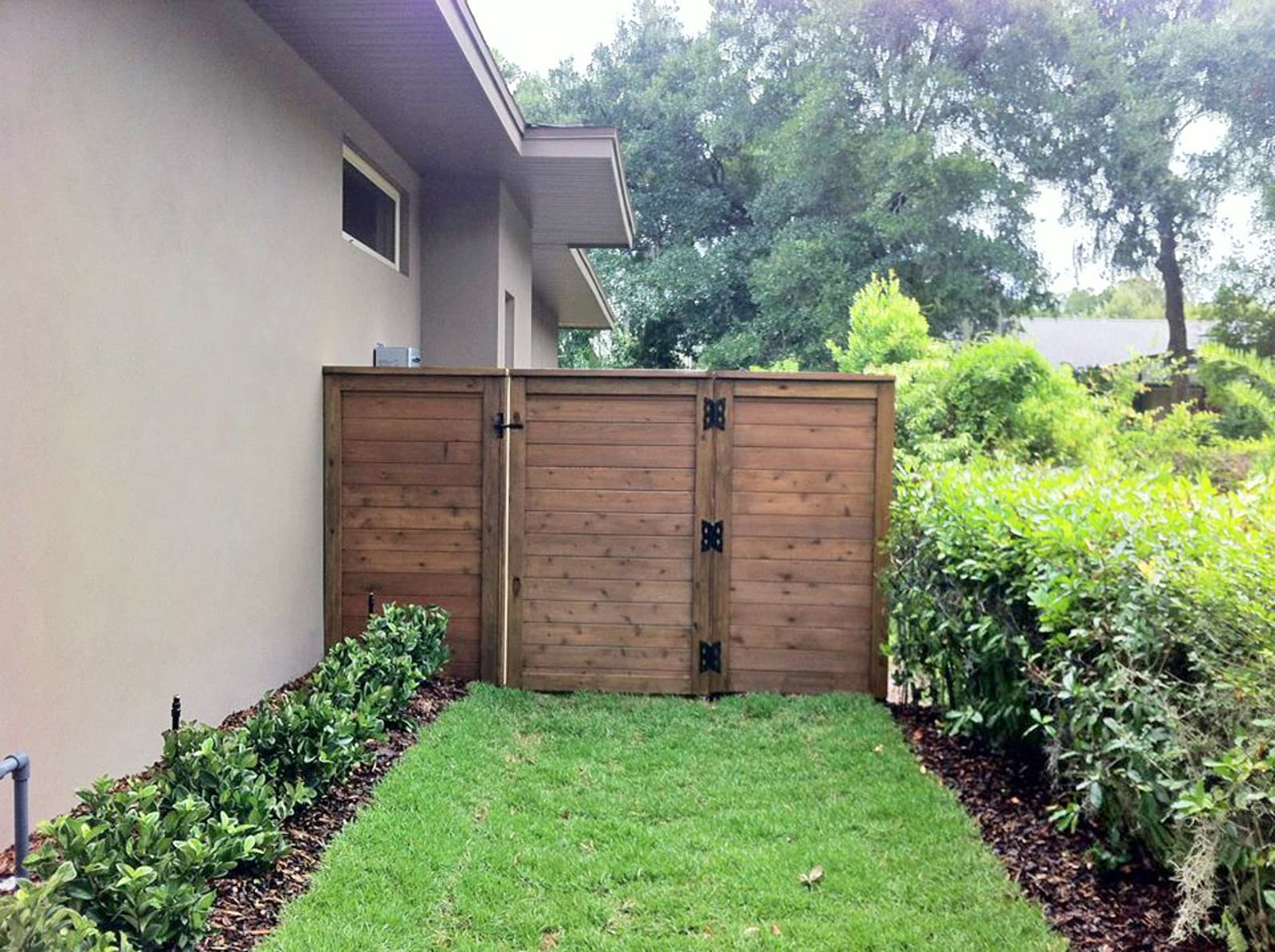
A flat-top solid run, often capped with a top rail or trim board for a cleaner architectural line. Popular around pools, patios, and hot tubs where screening matters more than airflow.
Picket
Spaced pickets at three to four feet, typically for front yards, garden borders, and pet containment where the goal is a boundary rather than privacy. This is usually the style that satisfies a front-yard height limit.
Post and Rail
Two or three horizontal rails on spaced posts, for paddocks, acreage, and property lines on larger lots east of Orlando. Often combined with welded wire when it needs to hold animals.
Pressure-Treated Pine or Cedar
Almost every wood fence in Central Florida is one of two species, and the choice is a real trade-off rather than good versus better.
Pressure-treated southern yellow pine is the workhorse. It is treated under pressure with preservatives that resist rot and termites, it is the most affordable option, and it is what most Orlando back-yard fences are built from. It arrives slightly damp, so it needs a few months to dry before sealing, and it is more prone to warping and cupping than cedar as it dries.
Western red cedar is naturally resistant to rot and insects without chemical treatment, is dimensionally more stable, and weathers to a silver-grey rather than warping. It costs meaningfully more. Choose it when appearance matters and the fence is somewhere you look at every day.
Posts are the part worth spending on either way. We set pressure-treated posts even on cedar fences, because the post is the component sitting in wet ground.
Heights, Layout, and Privacy
Six feet is the standard Orlando back-yard privacy height and the tallest you can usually build without a permit. Four feet is typical for front yards where a height limit applies. Eight feet is possible but needs a permit inside Orlando city limits and stronger posts and bracing to handle wind load.
Layout details that matter more than people expect: which way the finished face points, whether the fence steps or rakes to follow a slope, where gates land relative to gates and A/C units, and how the run meets an existing neighbour fence. We plan walk gates and double drive gates at the same time as the fence rather than adding them afterwards, because a gate opening changes post spacing.
Orlando Permits and HOA Rules
Inside Orlando city limits, no permit is required for a residential fence up to six feet on a one or two family property when it is built from wood, vinyl, chain link, aluminum, wrought iron, or plant material, complying with City Code Chapter 58, Part 5B(5). Anything over six feet does require a permit, as does a masonry wall over four feet. Corner lots have to respect the 25 foot sight-distance triangle at intersections so the fence does not block visibility.
If the property is in unincorporated Orange County rather than the city, permitting goes through the County instead, and the rules are not identical.
In practice the binding constraint is usually not the city, it is the HOA. Many Orlando communities dictate the maximum height, the style, whether the finished side must face the street, and sometimes the exact picket profile. Front-yard fencing is where HOAs are strictest. Check the covenants before choosing a style, and we are happy to look at them with you.
Maintenance and What to Expect
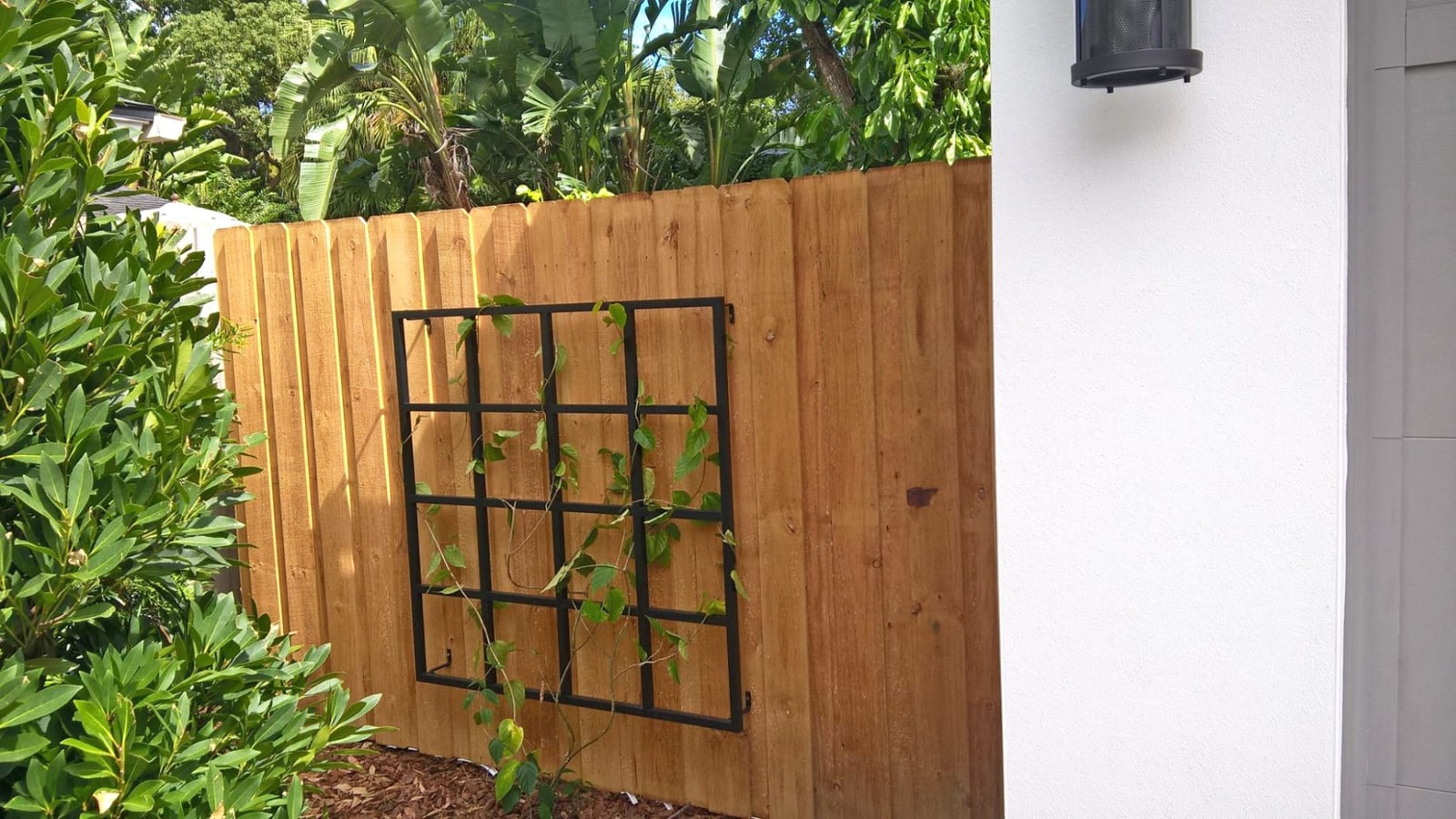
A pressure-treated pine fence in Central Florida will grey within a year or two and can be expected to give many years of service when the posts were set properly. Sealing or staining every few years slows the colour change and helps the surface shed water; left alone, the fence still works, it just weathers. Keep sprinkler heads pointed away from the boards, keep soil and mulch from piling against the bottom rail, and trim vines off the fence rather than letting them hold moisture against it.
When an older wood fence has failing posts rather than a few damaged boards, fence replacement is usually the better value than patching, and it is the route we can help with whoever built the original fence.
Our Wood Fence Installation Process
We start on site, because a wood fence is laid out around the property rather than ordered from a catalogue. We walk the line, confirm the property boundary, note slope, drainage, trees, and utilities, and agree gate positions. We confirm height and style against city rules and any HOA covenants. Post holes are dug to a depth suited to sandy soil and set in concrete, rails and boards go on once the posts have set, and gates are hung and adjusted last.
Products we install are made in the USA, and lifetime warranties are available. Ask about the warranty that applies to the style you choose.
Ready for a wood fence quote in Orlando? Contact us for a free estimate, or compare materials on our chain link, aluminum, and ornamental pages.