
Ornamental Fencing in Orlando: The Wrought Iron Look Without the Rust
Ornamental fencing is the elegant open-picket metal fence most people picture when they think of a wrought iron fence — slim vertical pickets, decorative tops, and clean sightlines. The difference is what it is made of. Our ornamental fences are powder-coated aluminum rather than true wrought iron, and in Central Florida that is an advantage rather than a compromise. Aluminum cannot rust. Iron can, and in Orlando humidity it eventually will.

All County Fence has installed ornamental fencing across Orlando and Central Florida for more than 20 years. We are licensed and insured, our products are made in the USA, and lifetime warranty options are available.
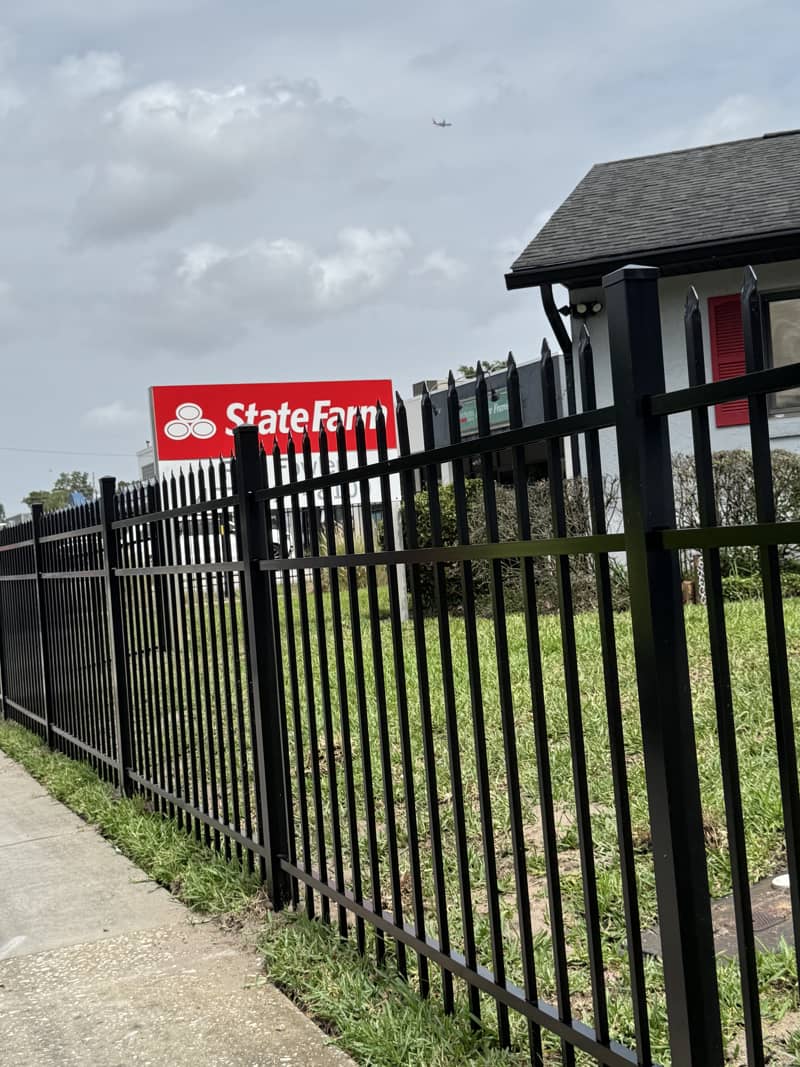
- The classic iron look — spear tops, finials, and scrollwork in the same profiles traditional ironwork uses.
- Rust-proof — aluminum does not corrode, and the powder-coat finish resists fading under Florida sun.
- Virtually no upkeep — nothing to sand, prime, or repaint. An occasional rinse is the whole maintenance schedule.
- Lighter and more affordable than iron, with no specialized ironwork or on-site welding.
- Open sightlines — security without walling off the view of the yard, the pool, or the street.
- Built strong — 100% American-made, engineered 45% stronger through high-quality aluminum components, and constructed with 80% recycled material.
Ornamental Fence Styles We Install
Ornamental fencing is defined more by its details than by its material. These are the choices that come up on nearly every estimate.
Picket Tops
- Spear top (pressed point):pickets extend past the top rail and finish in a point. The most traditional iron profile, and the hardest to climb.
- Flat top:pickets finish flush with the top rail for a clean, modern line. Common around pools and contemporary homes.
- Extended picket:pickets pass above the rail without a decorative point — a middle ground between flat and spear.
- Staggered spear:alternating picket heights for a more decorative, less uniform top line.
- Arched panels:a curved top rail, usually reserved for gates and entry sections.
Rail Configurations
Two-rail panels are the residential standard. Three-rail adds rigidity and is used on taller runs and commercial work. A puppy picket panel adds extra pickets between the lower rails, narrowing the spacing so small dogs cannot slip through — worth asking for up front if you have a small breed. See pet fence installation if containing an animal is the main reason for the fence.
Heights
Residential ornamental runs are usually 4 ft or 5 ft, with 6 ft where added security matters, and 3 ft to 3.5 ft for garden and decorative borders. Commercial perimeters run taller. In the City of Orlando, 6 ft is the standard maximum in side and rear yards and 4 ft in the front-yard street setback — which matters more here than with other materials, because ornamental is the fence most often chosen for a front yard.
Colors and Finishes
Black is by far the most requested color, and the one that reads most like traditional ironwork. Bronze, white, sand, and green are also standard. The finish is a baked-on powder coat rather than paint, so it does not peel or need repainting the way a coated iron fence does.
Decorative Details
This is where an ornamental fence stops looking like a stock panel. Options include finials and ball caps on the posts, scrolls and rings worked into the panels, and decorative rail detail on entry sections. Detail can be concentrated at the gate and street frontage and kept plain along side runs, which is the usual way to get the estate look without pricing the whole perimeter that way.
Rackable Panels for Sloped Ground
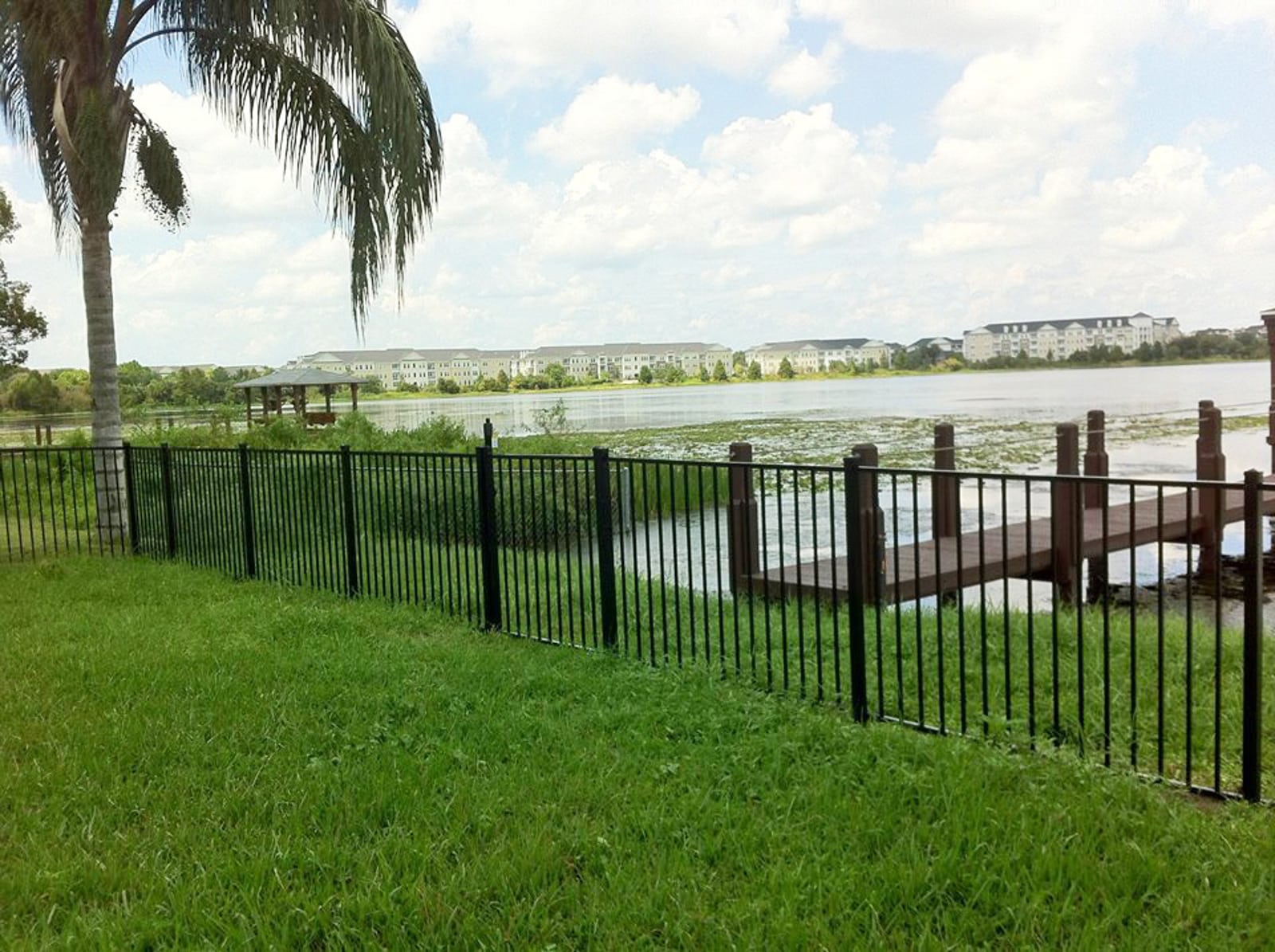
Central Florida lots are rarely perfectly flat. Rackable ornamental panels pivot at the rail connections so the fence follows the grade in a continuous line instead of stair-stepping down a slope and leaving gaps under the bottom rail.
Matching Ornamental Gates
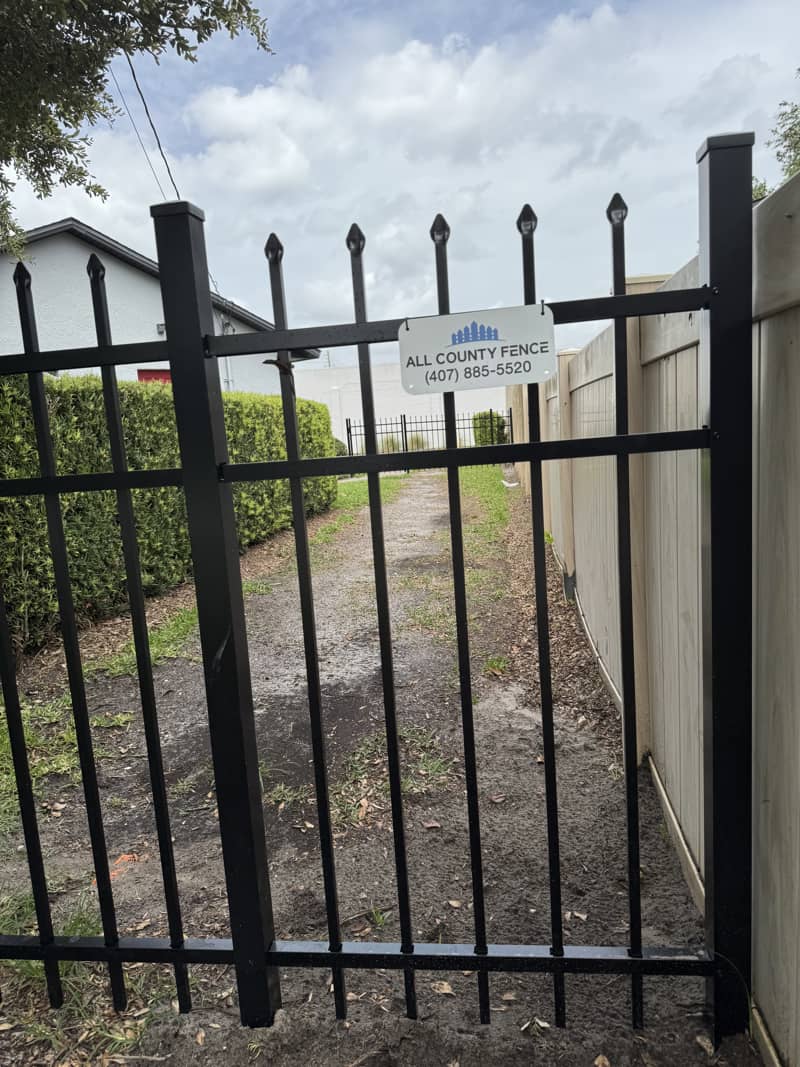
Walk gates for pedestrian access and double drive gates for vehicles, built in the same style and finish as the fence so the gate does not read as an afterthought. Arched entry gates are a common upgrade at driveway entrances. If you want the gate to open on a keypad, remote, or intercom, see gate installation.
Ornamental Aluminum vs. True Wrought Iron
People search for wrought iron, rod iron, and ornamental fencing interchangeably, and it is worth being clear about the difference, because it changes what you should buy.
True wrought iron is forged ironwork, usually custom fabricated and welded on site. It is heavy, genuinely beautiful, and expensive. It also oxidizes. In a humid subtropical climate an iron fence needs its coating maintained, and once rust starts at a weld or a fastener it spreads. Historic properties sometimes justify that maintenance. Most Orlando homes do not.
Ornamental aluminum reproduces the same visual language — the picket spacing, the spear tops, the finials and scrolls — in an extruded aluminum system that will not rust at all. It installs faster, costs less, and needs nothing from you afterward.
All County Fence installs ornamental aluminum. We do not fabricate or install true wrought iron. If you specifically need forged ironwork for a historic restoration, we will tell you that up front rather than sell you something else. For every other project, ornamental aluminum is the better answer in this climate — we walk through the reasoning in more detail in 4 reasons to choose ornamental fences over wrought iron.
Where Ornamental Fencing Works Best
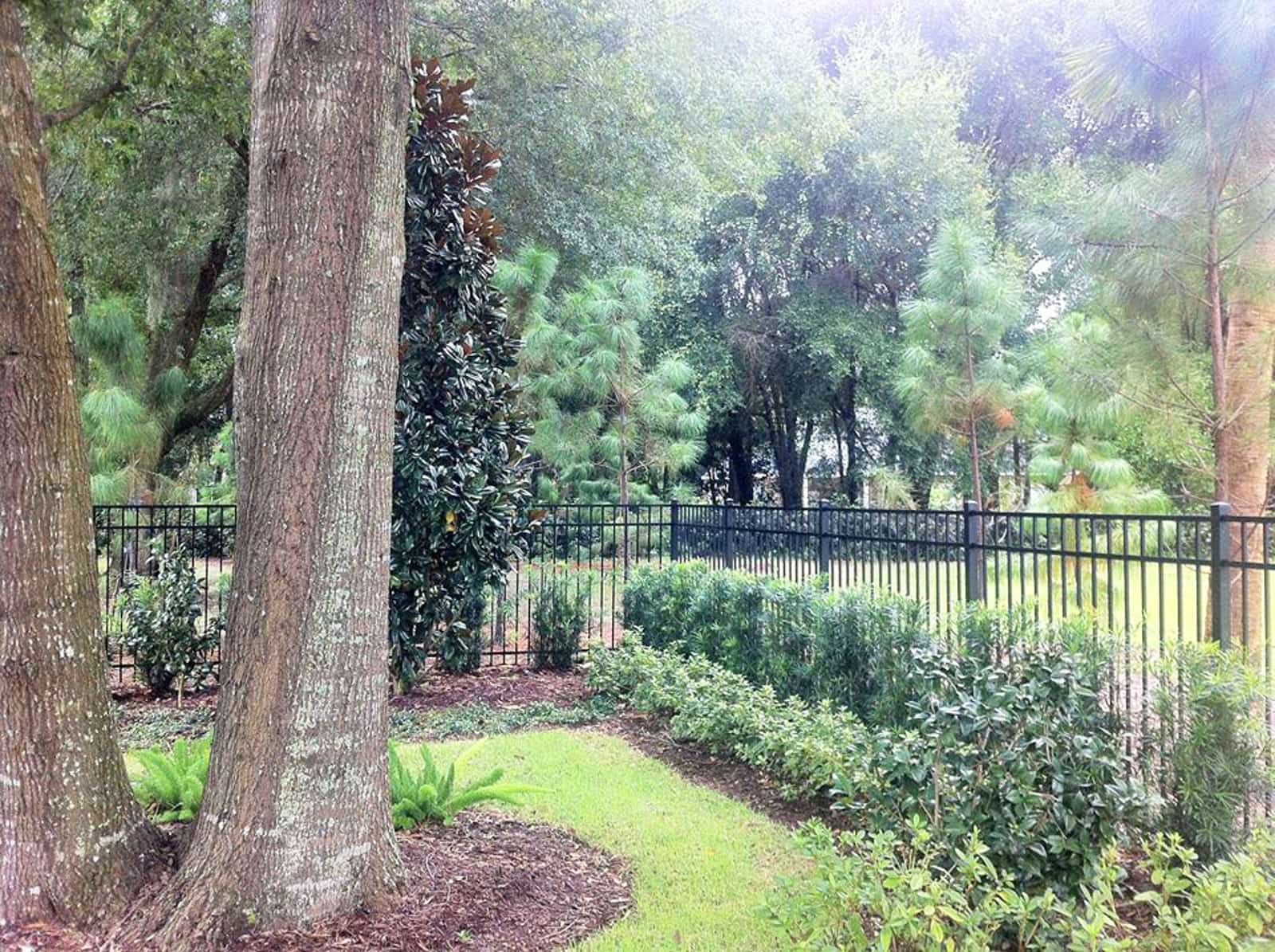
- Front yards and street frontage — the main reason homeowners choose ornamental. It defines the property and adds curb appeal without blocking the house from view.
- Driveway and estate entrances — ornamental panels with a matching drive gate are the standard treatment for a gated entry.
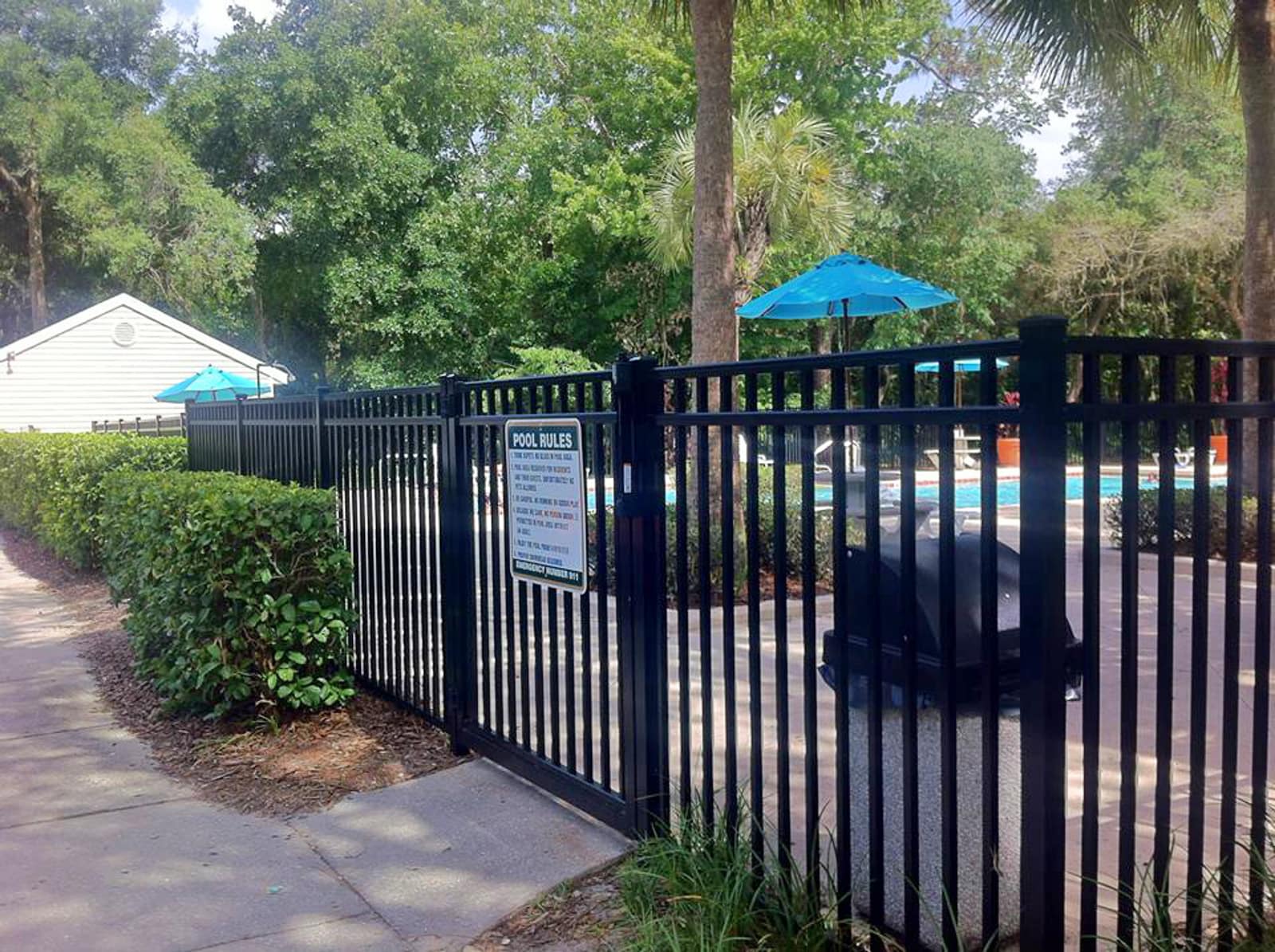
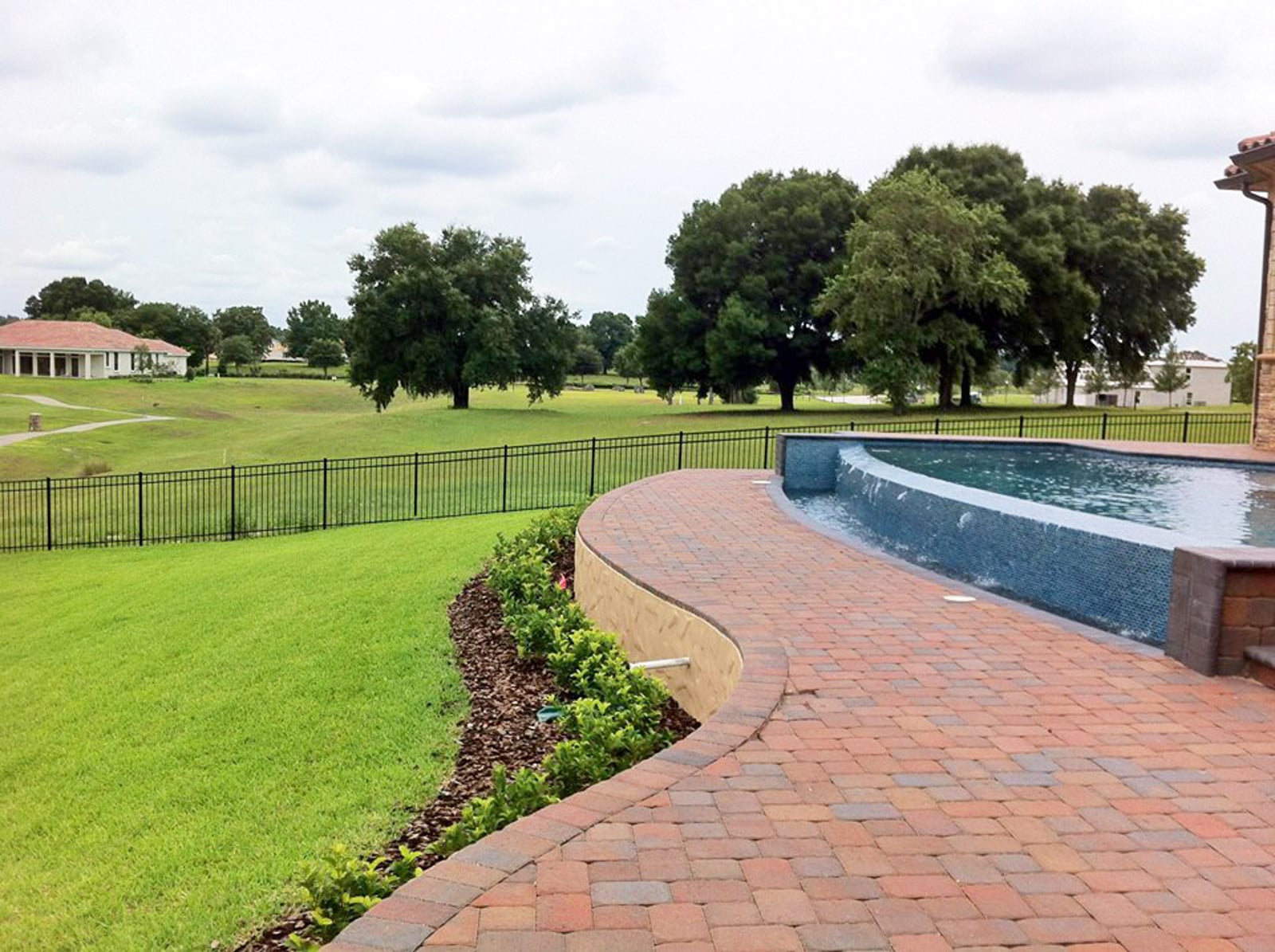
- Pool enclosures — ornamental aluminum is the most popular pool barrier material in Orlando because it satisfies the code requirements while keeping the water in view. Barrier heights, sphere clearances, and self-closing gate rules are covered on our aluminum fencing page.
- Garden and courtyard borders — lower decorative runs that separate space without enclosing it.
- Commercial and professional properties — offices, medical buildings, apartment communities, and HOA common areas where the perimeter has to control access and still look presentable. See commercial fence installation.
- Replacing a failing wood or chain link fence — a common upgrade once an older fence reaches the end of its life. Fence replacement handles removal and new installation as one project.
Orlando Fence Permits, Front-Yard Limits, and HOA Rules
The City of Orlando does not require a permit for most residential fences. A fence permit is not needed when all of the following are true:
- The property is a one- or two-family residence
- The fence is 6 feet or less, measured from normal building-site grade
- The material is wood, vinyl, chain link, aluminum, wrought iron, or plant material
- The fence complies with Orlando City Code Chapter 58, Part 5B(5)
Anything over 6 feet still requires a permit. Orlando also enforces a 25-foot sight-distance triangle at street intersections, so corner lots have a lower allowable height near the road — a detail that comes up often with ornamental fencing precisely because it goes in front yards.
Addresses in unincorporated Orange County permit through the County rather than the City, and the rules are not identical. We confirm which jurisdiction your property falls under before quoting.
HOA rules are separate from both, and for ornamental fencing they are usually the binding constraint. Many Orlando communities specify the permitted style, color, and picket profile for front-yard metal fencing, and some allow black only. Bring us the architectural guidelines at the estimate and we will spec the fence to match them.
Residential, Commercial, and Industrial Grades
Not all ornamental aluminum is built the same. Residential grade suits homes, gardens, and pool enclosures. Commercial and industrial grades use thicker-walled rails, heavier pickets, and reinforced posts for schools, businesses, apartment communities, and high-traffic gates. We recommend the grade based on how the fence will actually be used, not on the size of the property.
How We Install Ornamental Fencing
- Layout and boundary check:we walk the fence line, confirm placement against your property line and setbacks, and mark gate and access points.
- Design and detail selection:picket top, rail configuration, color, and decorative detail are settled before anything is ordered, since panels are manufactured to the specification.
- Setting the posts:terminal, corner, and gate posts are set in concrete first, then line posts. Footing depth is the detail that matters most in Orlando’s loose sandy soil — shallow posts are the single most common reason a metal fence starts to lean.
- Hanging the panels:panels are set level and racked to the grade where the ground slopes, so the top line stays continuous.
- Gates and hardware:gates are hung, squared, and latched so they still close correctly a year later. Pool gates get self-closing, self-latching hardware.
- Final alignment and cleanup:we haul the debris away.
Serving Orlando and Surrounding Areas
We install ornamental fencing throughout Orlando, Orange County, and Seminole County. See our service areas, or compare ornamental against aluminum, PVC vinyl, wood, and chain link fencing.
Get a Free Ornamental Fence Estimate
Tell us what the fence needs to do — enclose a pool, front a street, secure a commercial perimeter — and we will spec the style, height, and grade to match, along with any HOA or permit requirements. Reach out today for a free estimate, or call (407) 885-5520.