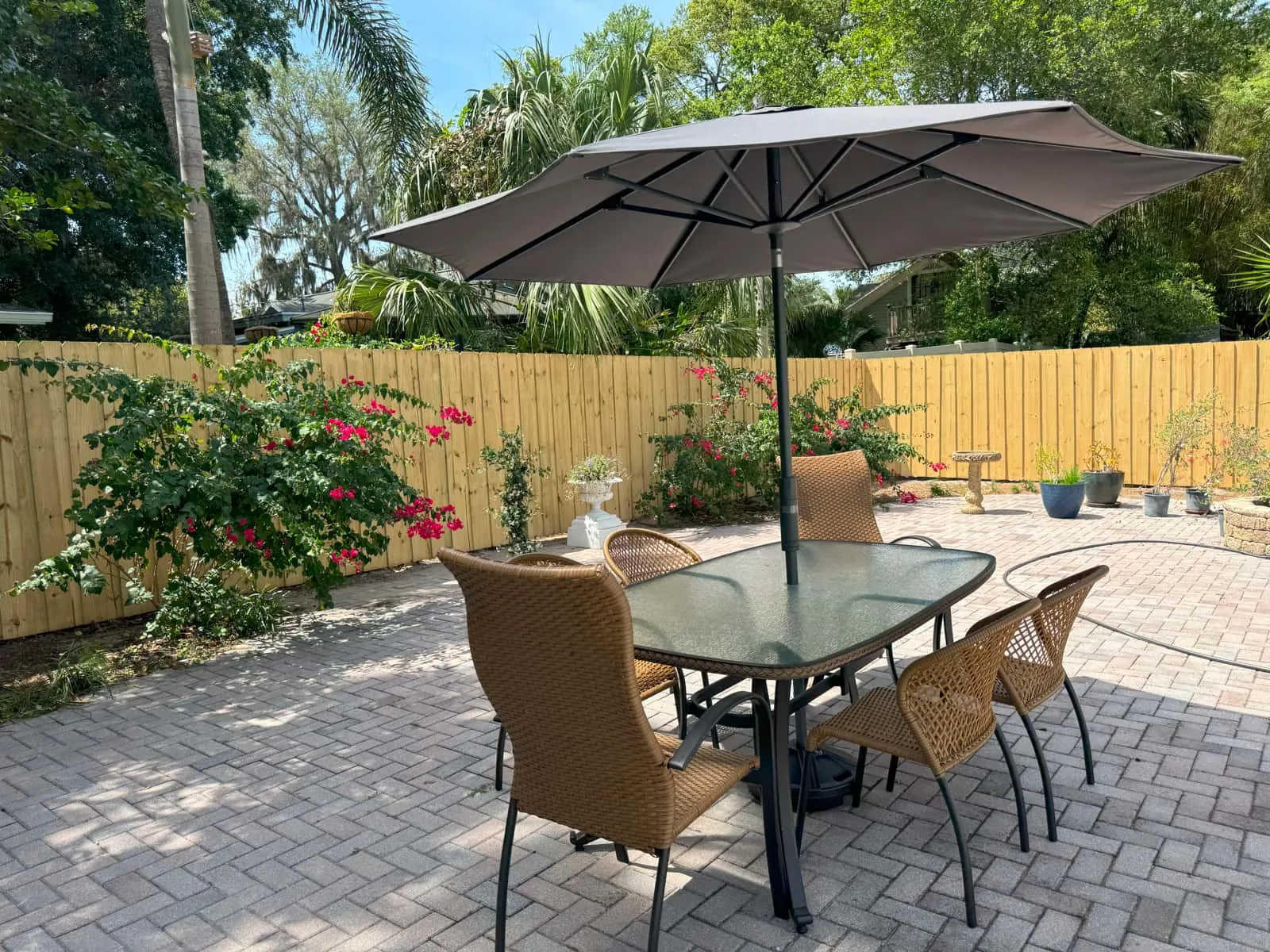
Start with what you need to hide
Affordable privacy fencing starts with the view you want to block, not the material you want to buy.
Stand on your patio and check:
- A neighbor’s ground-floor window: A solid section along that side may solve the problem.
- The entire backyard: Compare complete wood and vinyl installations.
- Pool equipment or trash cans: A short enclosure may be enough.
- Movement through existing chain link: Screen fabric or slats can reduce visibility.
- An upstairs window: A typical backyard fence may not block that angle, regardless of material.
A shorter project can cost more per foot but less overall. Ask for a layout that solves the actual sightline before pricing the entire property.
Compare new fencing with upgrades to an existing fence
These examples show why the starting point matters.
| Option | Installed price per foot | Example for 150 feet | Main trade-off |
|---|---|---|---|
| Screen fabric on existing chain link | About $4.35 to $5.65 | About $650 to $850 | Partial privacy; needs a sound supporting fence |
| Bottom-locking slats on existing chain link | About $15.50 | About $2,325 | Visible gaps remain |
| New six-foot treated wood privacy | About $26 | About $3,900 | More upkeep than vinyl |
| New six-foot white vinyl privacy | About $30 | About $4,500 | Higher upfront price |
| New six-foot galvanized chain link plus slats | About $31.50 | About $4,725 | Can cost more than solid fencing while giving less privacy |
Illustrative pricing, not a quote. Wood and vinyl figures use our September 2026 price-book baseline. Screen and slat figures come from our published installation examples. Existing-fence upgrades do not include a new fence. New-fence examples exclude gates and old fence removal; condition, access, layout, and project length affect the final price.
Do not compare the lowest four-foot price for one material with a six-foot price for another. Compare the same height, footage, gates, and installation scope.
Treated wood: the budget choice for a new solid fence
Wood privacy fencing gives you a solid barrier without paying for premium colors, decorative tops, or custom layouts.
The style still matters.
Stockade uses less lumber
Stockade has boards placed side by side on one face of the rails. It is the most economical wood style we build.
The compromise is movement. As the boards dry, narrow gaps can appear. If keeping the initial price down matters more than eliminating every sightline, ask for a stockade quote.
Board-on-board adds overlap
Overlapping boards help maintain privacy as the wood dries. That overlap uses more lumber, so it costs more than stockade.
If the fence faces a patio or pool seating area, that extra coverage may matter more than the lowest initial quote. Our wood fence installation page explains the layouts.
Shadowbox is not fully private from every angle
Shadowbox alternates boards on opposite sides of the rails. It provides airflow and a finished look from both properties.
From an angle, you can see through it. Choose it for that balance, not because you expect the same screening as an overlapping solid fence.
Existing chain link: fabric costs less than slats
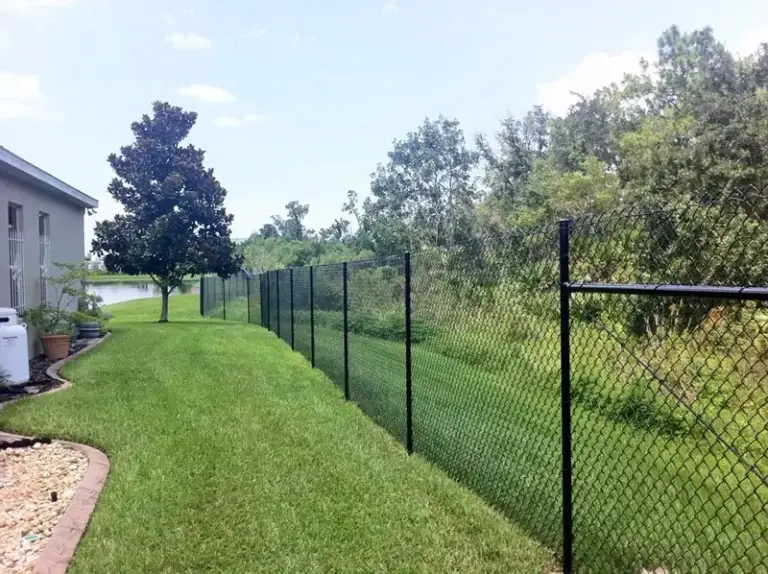
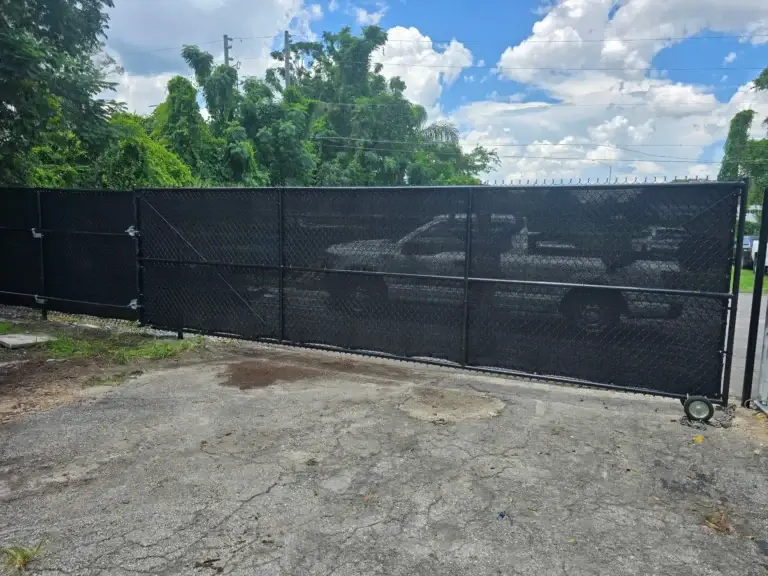
Privacy screen fabric is the lowest-cost option in this comparison when you already have suitable chain link.
You are paying to cover an existing structure rather than build posts, rails, and panels from scratch.
What you give up:
- Complete concealment: Mesh screening reduces visibility rather than creating a solid wall.
- A permanent-panel appearance: Fabric looks different from a finished wood or vinyl installation.
- A simple attachment decision: Screening changes how much wind the fence catches.
Slats offer another option, but they also leave openings.
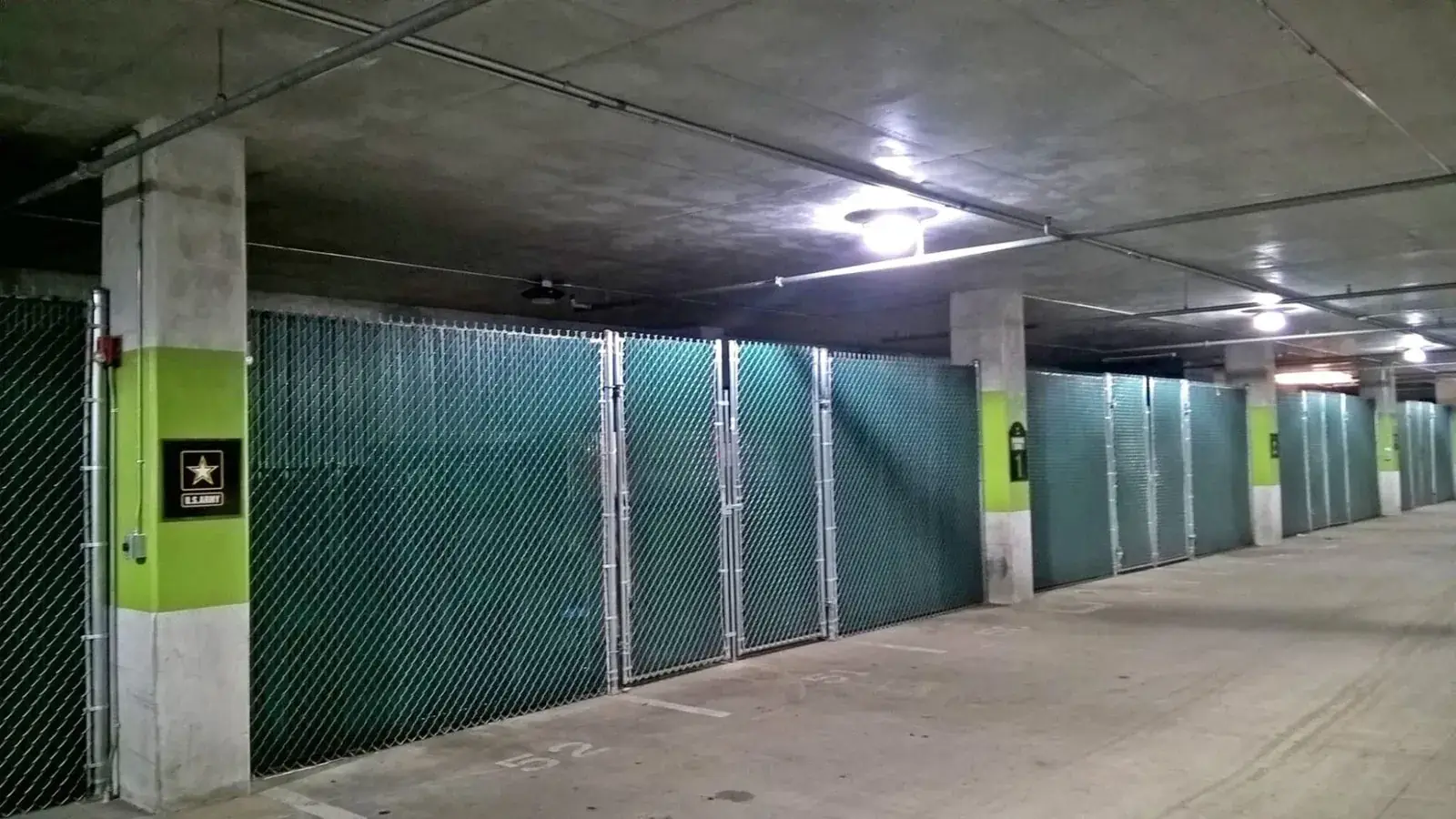
For example, Pexco lists approximately 75% wind-load and privacy factor for its Bottom Lock slats. That is not the same as a solid panel, and the manufacturer warns about wind damage when structural support is insufficient.
Have the fence checked before adding either product. A leaning post does not become stronger when you cover the mesh.
Our chain link privacy slat guide explains the options in more detail.
Building new chain link just to add privacy can cost more
The cheapest fence without screening is not necessarily the cheapest finished privacy solution.
Using our published examples:
- New galvanized chain link plus installed slats: about $31.50 per foot.
- Six-foot treated wood privacy: about $26 per foot.
Across 150 feet, that is about $825 more for chain link with slats, before differences in gates and other project details.
Slats make more financial sense when the supporting fence is already there and in good condition. For a new installation, compare the complete screened system against solid fencing.
White vinyl: price the upkeep difference too
White vinyl costs more upfront in our price-book comparison, but it does not need staining or sealing.
At $30 rather than $26 per foot, the fence-only difference is approximately $600 across 150 feet. That is a comparison, not a promise that vinyl will pay for itself within a particular number of years.
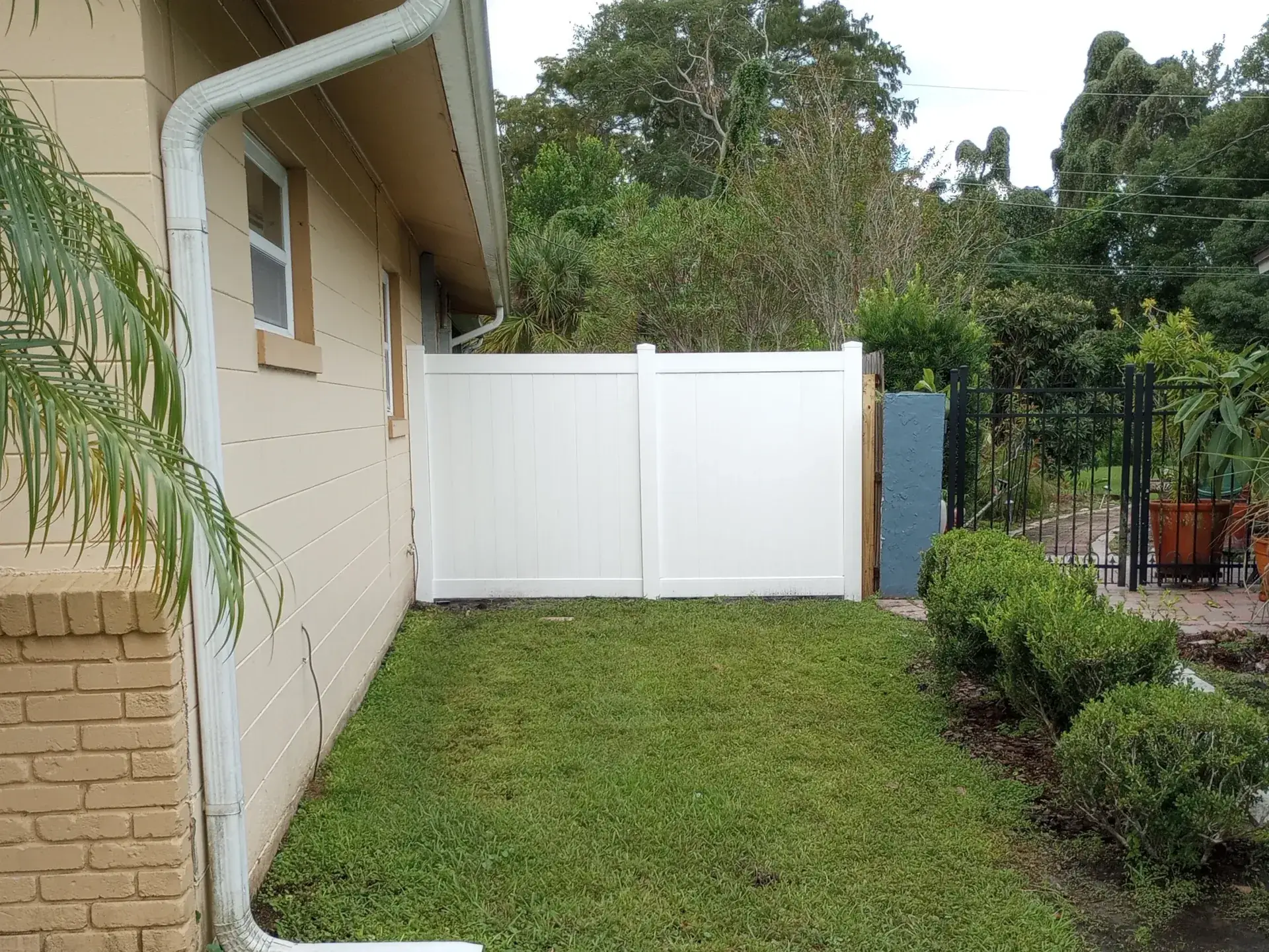
Wood needs ongoing attention to moisture, vegetation, and its finish. Vinyl still needs cleaning and checks for damaged panels, posts, and gate hardware.
If both fit your initial budget, compare upkeep as well as installation price. See our PVC vinyl fencing options for solid and semi-private styles.
Save on scope and decoration, not hidden support
A budget fence should be simpler, not poorly installed.
Ways to reduce the project cost:
- Screen the area that needs it. A patio section may do more for you than fencing an unused corner.
- Choose a standard vertical style. Get decorative upgrades priced separately.
- Compare standard white vinyl with premium finishes. Color and texture can change the total.
- Plan gate openings carefully. Include the access you need without adding unnecessary openings.
- Get the complete installed price. Include removal, gates, hardware, and any required permit.
Do not cut corners on ground-contact-rated posts, footings, fasteners, or gate support.
Wood-care guidance from the USDA Forest Products Laboratory identifies groundline decay as an important cause of post failure. Pressure-treated lumber still needs the correct rating for where it is used.
Before you accept the lowest quote
Ask every installer to specify:
- Fence height, material, and exact style.
- Post type, spacing, footing depth, and concrete.
- Gate sizes, hardware, and any reinforcement.
- Old fence removal and cleanup.
- Permit responsibility and applicable HOA requirements.
- Warranty coverage and exclusions.
If the fence also serves as a pool barrier, say so before comparing prices. Screening alone does not establish pool-barrier compliance.
For a new private backyard, start by pricing treated wood. For existing chain link, compare screening with replacement. If upkeep is the deciding factor, price white vinyl alongside wood.
At a free on-site estimate, All County Fence can walk the sightlines, check the existing fence, and give you an itemized comparison. Start with our instant ballpark quote.
For the full material-by-material price comparison, see our Orlando fence cost guide.