The short answer: match the fence to the dog
Every material we install can keep a dog in. What decides it is how your dog tries to get out. Start here:
| Your dog | What matters most | Fence that fits |
|---|---|---|
| Jumper or big, athletic breed | Height | 5 or 6 ft wood, vinyl or aluminum |
| Small dog or puppy | Gap size | Solid vinyl or wood, chain link, or aluminum with tighter picket spacing |
| Digger | The bottom line | Any fence kept close to the ground, plus a dig barrier on the inside |
| Barks at everything going by | What the dog can see | Solid vinyl or wood privacy |
| Climber | Footholds | Vinyl privacy, which is smooth on both sides |
| Calm dog, big yard, tight budget | Cost per foot | Chain link |
Plenty of dogs fit two rows. A small terrier that digs and barks needs a solid fence with a tight bottom line, not just a solid fence.
Jumpers: height comes first
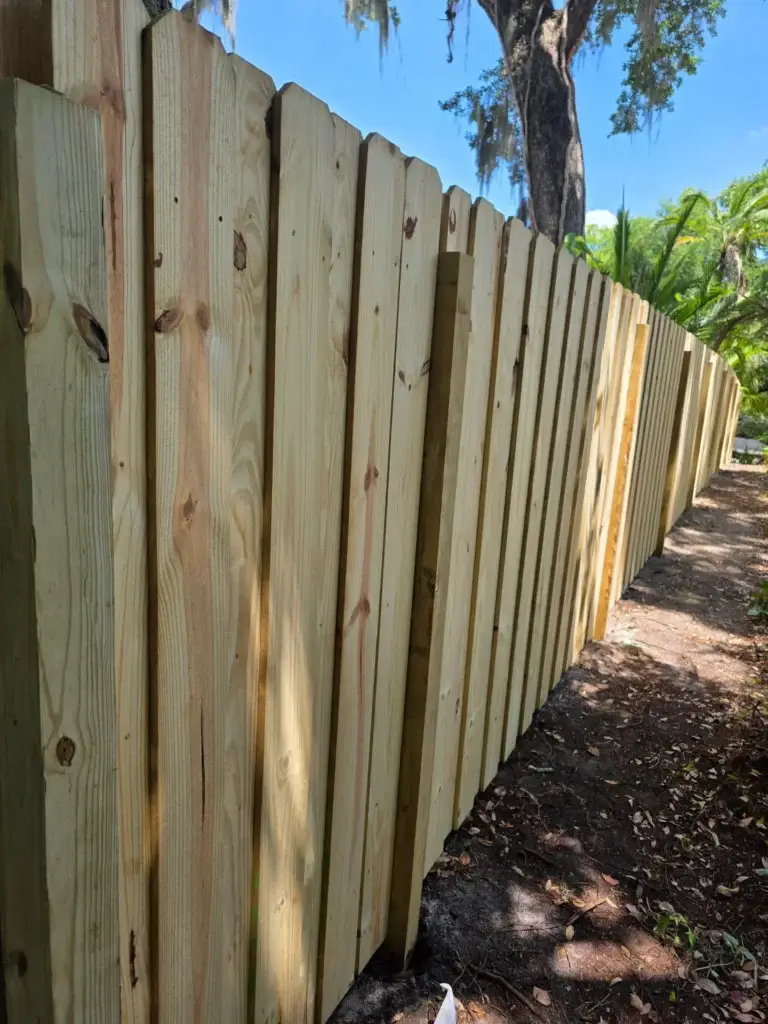
Most dogs stay in behind a 4-foot fence. Big or athletic breeds that jump, and dogs that have cleared a fence before, need 5 or 6 feet.
How tall you can go depends on where you live. Inside Orlando city limits, the City’s Fence Guide allows up to 6 feet in side and rear yards and 4 feet in the front yard, and a fence of 6 feet or less in wood, vinyl, chain link or aluminum on a one- or two-family lot doesn’t need a permit. Winter Park, Winter Garden, unincorporated Orange County and Seminole County have their own rules, and your HOA’s approval is still needed even when no permit is. Our Orlando fence permit guide covers the details.
One pricing quirk works in a jumper’s owner’s favor: our per-foot price for treated wood privacy is the same at 5 feet as at 6. If height is the question, build the six.
Height only works if the dog can’t get a running start from something else. Keep AC units, woodpiles, playsets and patio furniture off the fence line, or the 6-foot fence turns into a 3-foot one.
Small dogs and puppies: mind the gaps
Small dogs don’t go over a fence. They go through it or under it. Standard picket spacing on an open fence can be wide enough for a small dog to squeeze between, so the choices are:
- Solid vinyl or wood privacy: no gaps between boards at all.
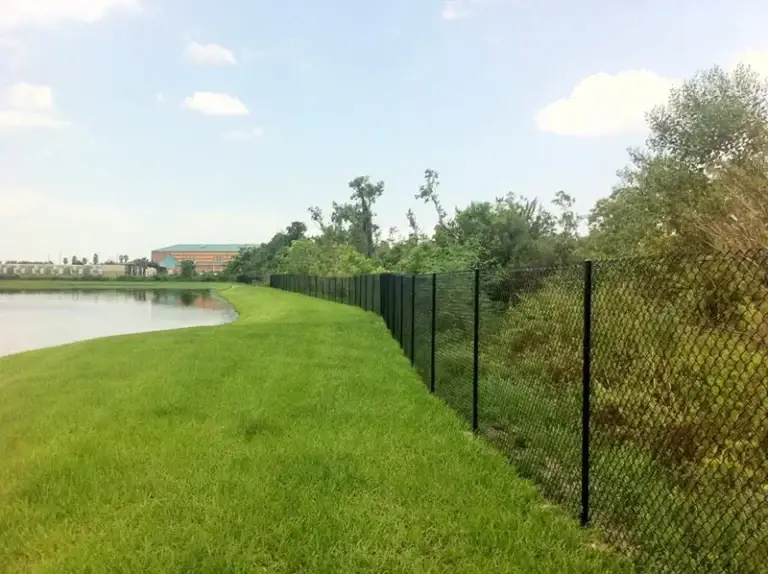
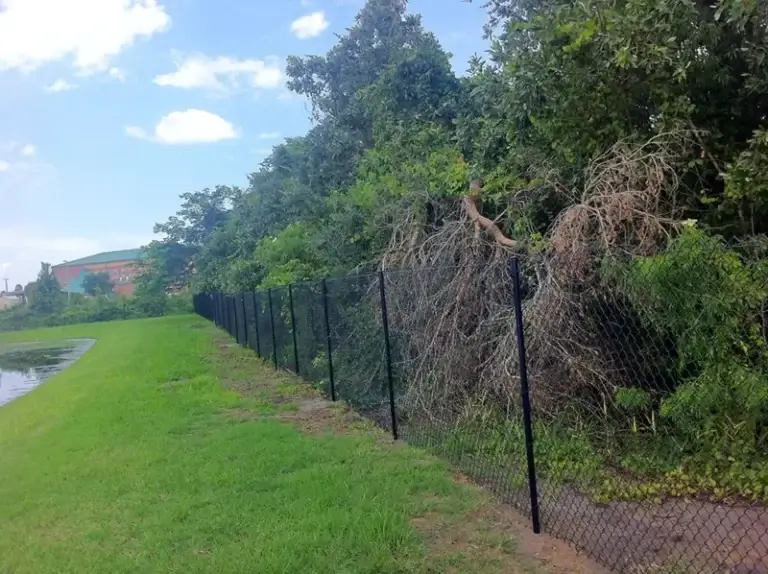
- Chain link: the mesh is too small for a dog to fit through, and it’s the least expensive fence we build.
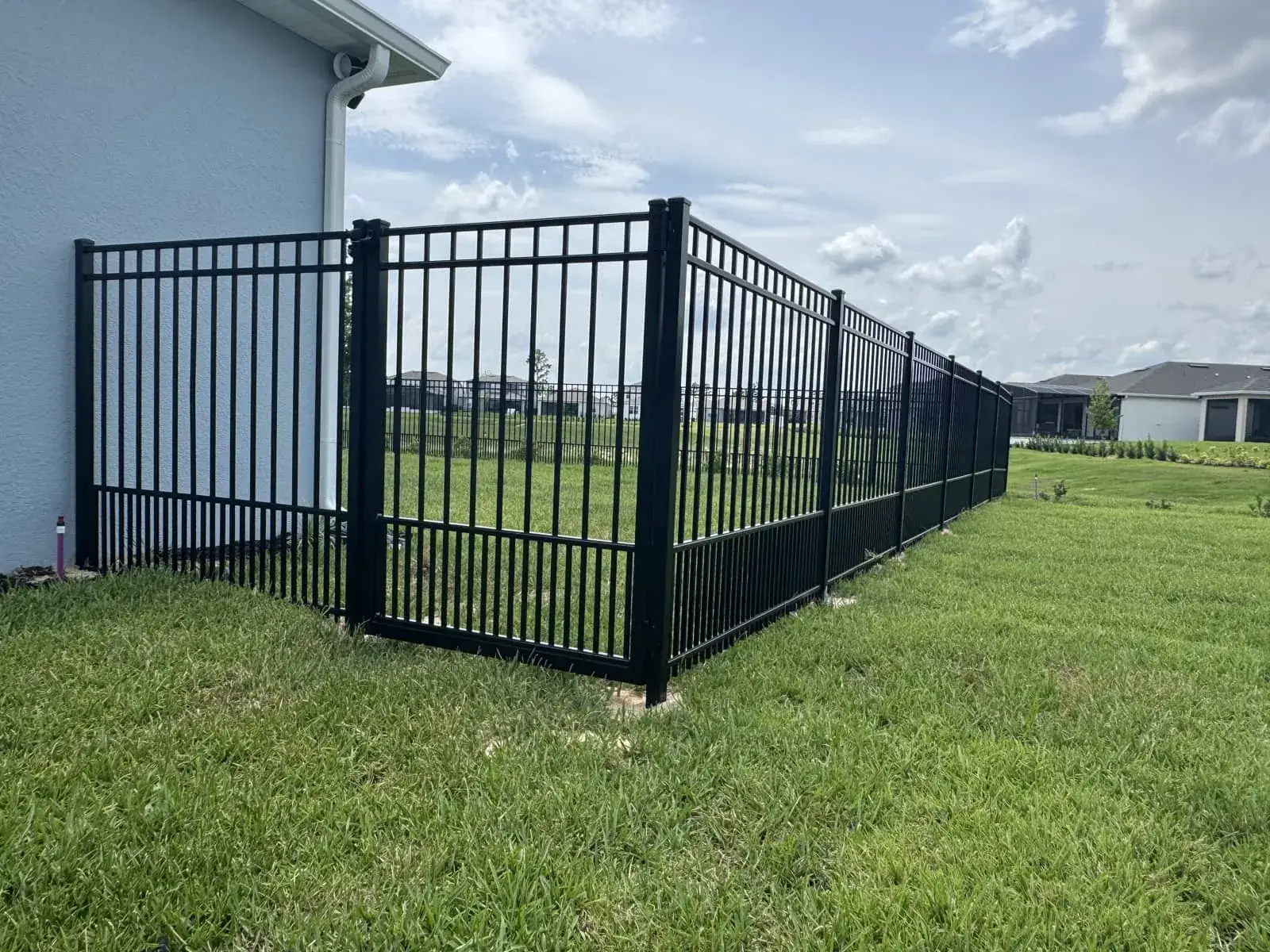
- Aluminum with tighter picket spacing: keeps the open look. Ask about it when you get your quote.
Check the gap under every gate as well as the gaps between pickets. And if it’s a puppy, fence for the adult dog: a big-breed puppy that slips through pickets in spring can be testing a 4-foot fence by fall.
Diggers: a tight bottom line
Central Florida’s sandy soil is easy digging, and a determined dog can tunnel under a fence in an afternoon. The fence’s job is to leave no easy starting point. We keep the bottom of the fence close to the ground and follow the grade along the whole run.
Slopes are where gaps show up. Aluminum and chain link can follow a slope. Solid privacy panels usually step down a slope instead, which leaves a triangle-shaped gap under each panel. On a sloped yard with a digger, that’s worth raising at the estimate.
For a serious digger, many owners add a barrier along the inside of the fence line, such as a row of pavers or wire mesh buried along the bottom. It stops the dog where it starts digging.
Big dogs that lean on a fence or hit it at full speed test the posts. We set every post two feet deep in a full 50 lb bag of concrete mix, so the fence stays tight.
Barkers: solid or see-through?
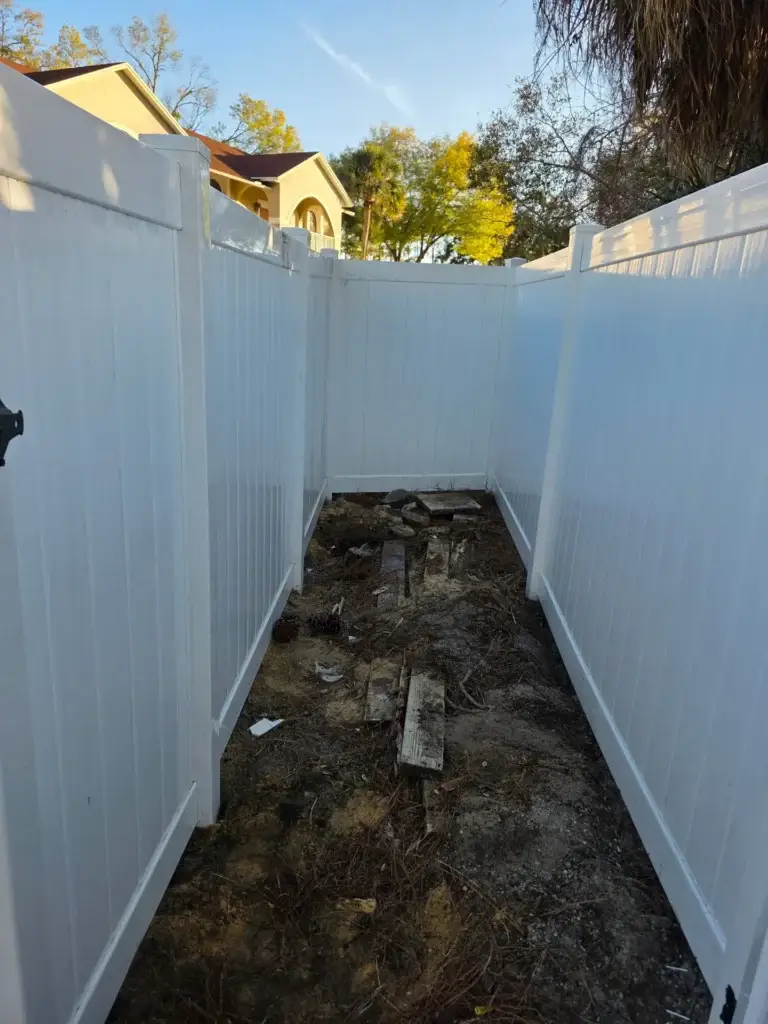
A dog that barks at every walker, delivery truck and squirrel is reacting to what it sees. Take away the view and most dogs settle down. That’s the case for a solid privacy fence:
- Treated wood privacy is the least expensive way to get full privacy.
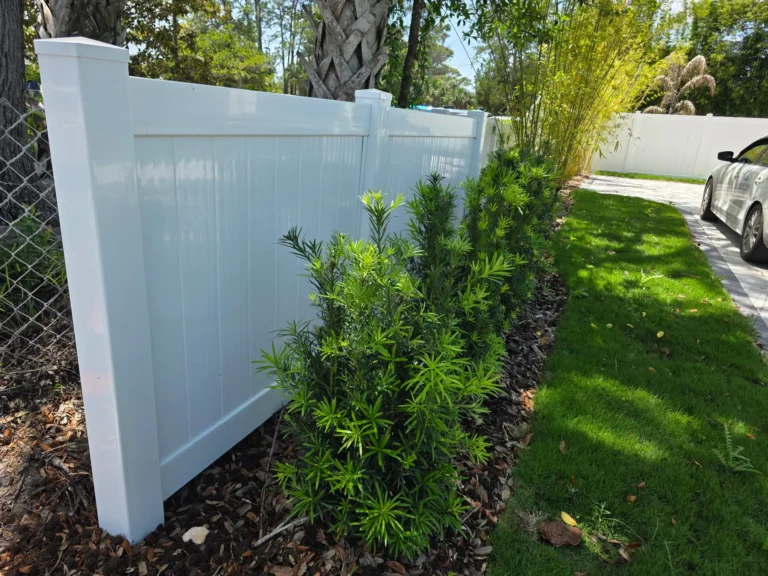
- Vinyl privacy costs a little more and never needs staining or sealing. It’s also smooth on both sides, which matters for climbers.
Privacy slats in chain link cut the view, but they don’t block it the way a solid panel does. For a reactive dog, go solid.
Calm dogs are a different story. If your dog ignores the neighbors, an open aluminum fence keeps your view of the lake, the pool or the yard, and chain link keeps costs down on a big lot.
A note on climbers
Some dogs climb rather than jump. Chain link gives them a foothold every few inches. On a wood fence, Orlando’s Fence Guide says the finished side should face outward, which puts the rails on your side of the fence, where a climber can use them. Vinyl privacy has no exposed rails to climb.
Gates: where most dogs get out
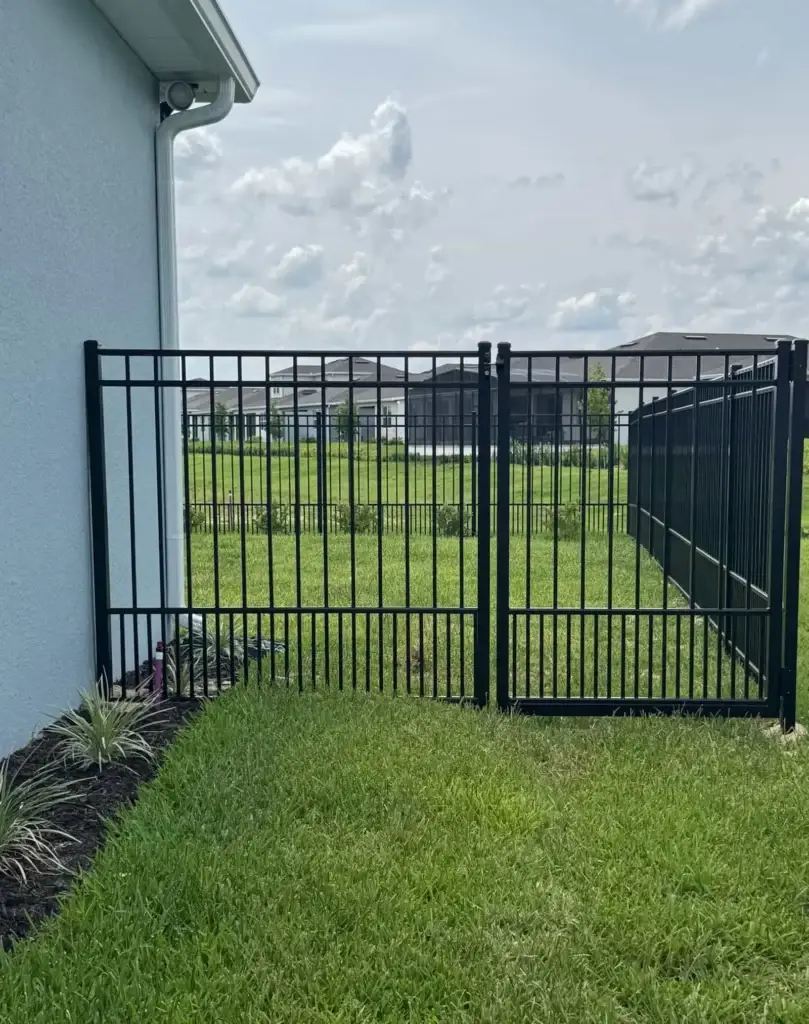
Most escapes happen at the gate, not the fence. A guest, a kid or the lawn crew doesn’t close it all the way, and the dog is gone. Two pieces of hardware fix most of that:
- Self-closing hinges swing the gate shut behind whoever walks through.
- A self-latching latch catches on its own when the gate closes.
If there’s a pool in the yard, Florida law already asks for this. Under Fla. Stat. 515.29, pool barrier gates must open outward, away from the pool, and be self-closing and self-latching. One fence can keep the dog in and meet the pool rules if it’s planned that way from the start. See our pool fence page.
What a dog fence costs
Our own installed prices, as of September 2026, from 4 feet at the low end of each range to 6 feet at the high end:
- Chain link: about $13 to $16 per foot galvanized, $16 to $19 in black, green or brown.
- Treated wood privacy: about $25 to $26 per foot.
- Vinyl privacy: about $23 to $34 per foot, depending on height and color.
- Ornamental aluminum: about $30 to $40 per foot.
On a 150-foot backyard, that’s roughly $1,950 for 4-foot galvanized chain link, $3,900 for 6-foot wood, $4,500 for 6-foot white vinyl and $5,900 for 6-foot aluminum, before gates. Gates run from about $250 for chain link to about $615 for a tall aluminum gate. Full numbers are in our Orlando fence cost guide.
What about invisible fences?
Underground electric systems work through a collar and training, not a barrier. They don’t keep other dogs, wildlife or people out of your yard, and a dog chasing something hard enough can run straight through the boundary. If the goal is a yard you can trust with the back door open, a physical fence does that.
How to decide
Write down how your dog has tried to get out, or how you think it would: over, through, under or out the gate. That answer, plus your HOA’s rules and your budget, picks the fence. At the free estimate, tell us about the dog. We’ll plan the height, spacing, bottom line and gates around it. See the options on our pet fence installation in Orlando page.