Start with the space around the driveway
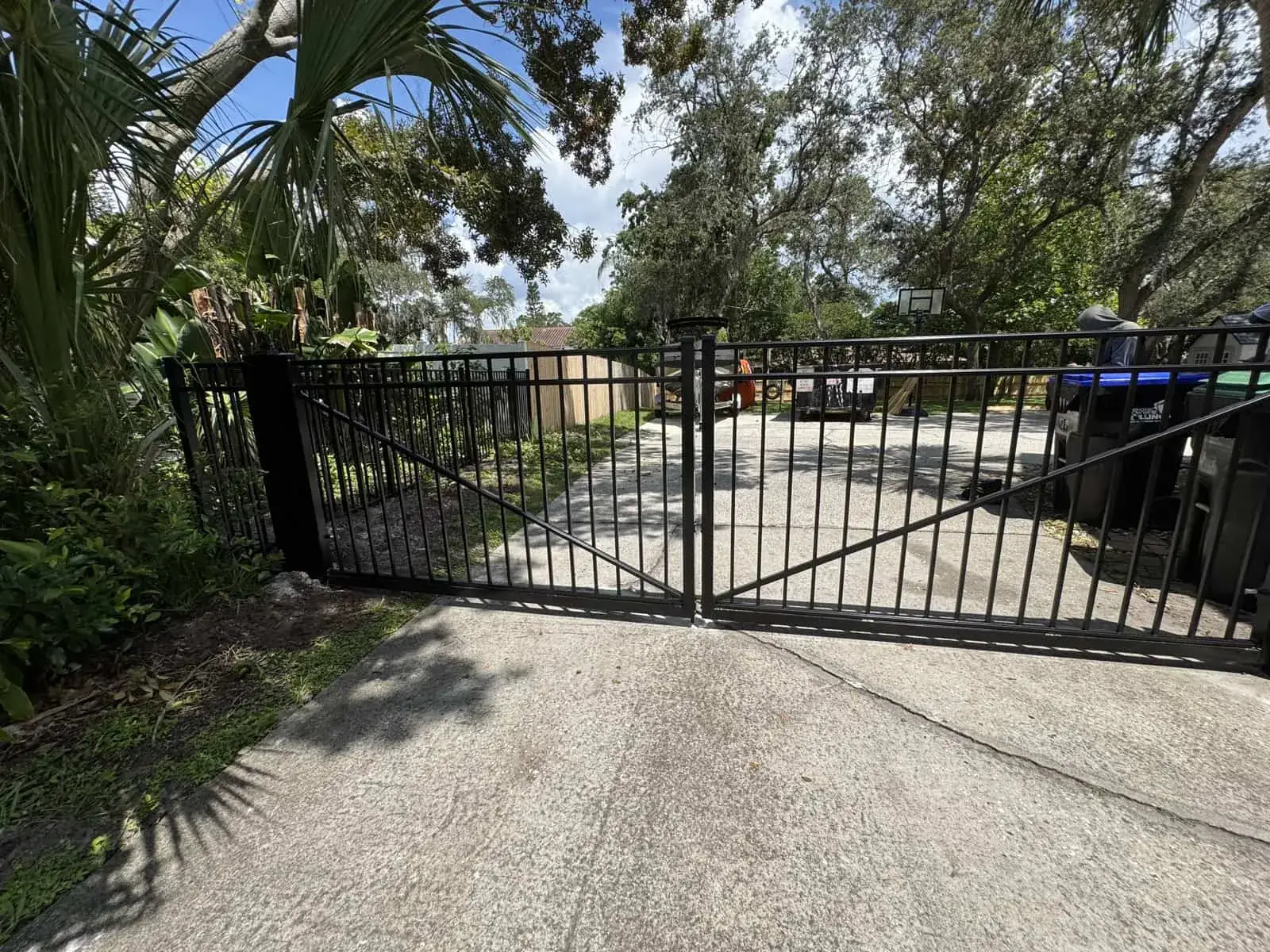
A sliding gate moves along the fence line, so it needs a clear side run where the panel can travel and park. A swing gate rotates through an arc, so it needs open space across the driveway on the side it swings toward. A parked car, wall, landscaping or rising grade can make that arc awkward.
Before comparing styles, check both paths: the swing area and the length of fence beside the opening. Measure the driveway opening too, and consider the largest vehicle that needs to pass through it.
When a swing gate is a good fit
A swing gate is worth considering when the driveway has a usable opening arc and the gate can open without hitting a vehicle, structure or other obstruction. Single and double leaves are both options. All County Fence describes a single swing driveway gate for narrower openings and double gates for wider driveways, boats or trailers.
Think through the opening direction before you settle on the style. The gate should not swing into a place where it blocks normal vehicle movement or conflicts with the property layout. If the driveway rises or falls through the arc, ask the installer to check ground clearance rather than assuming the gate will clear.
When a sliding gate is worth a closer look
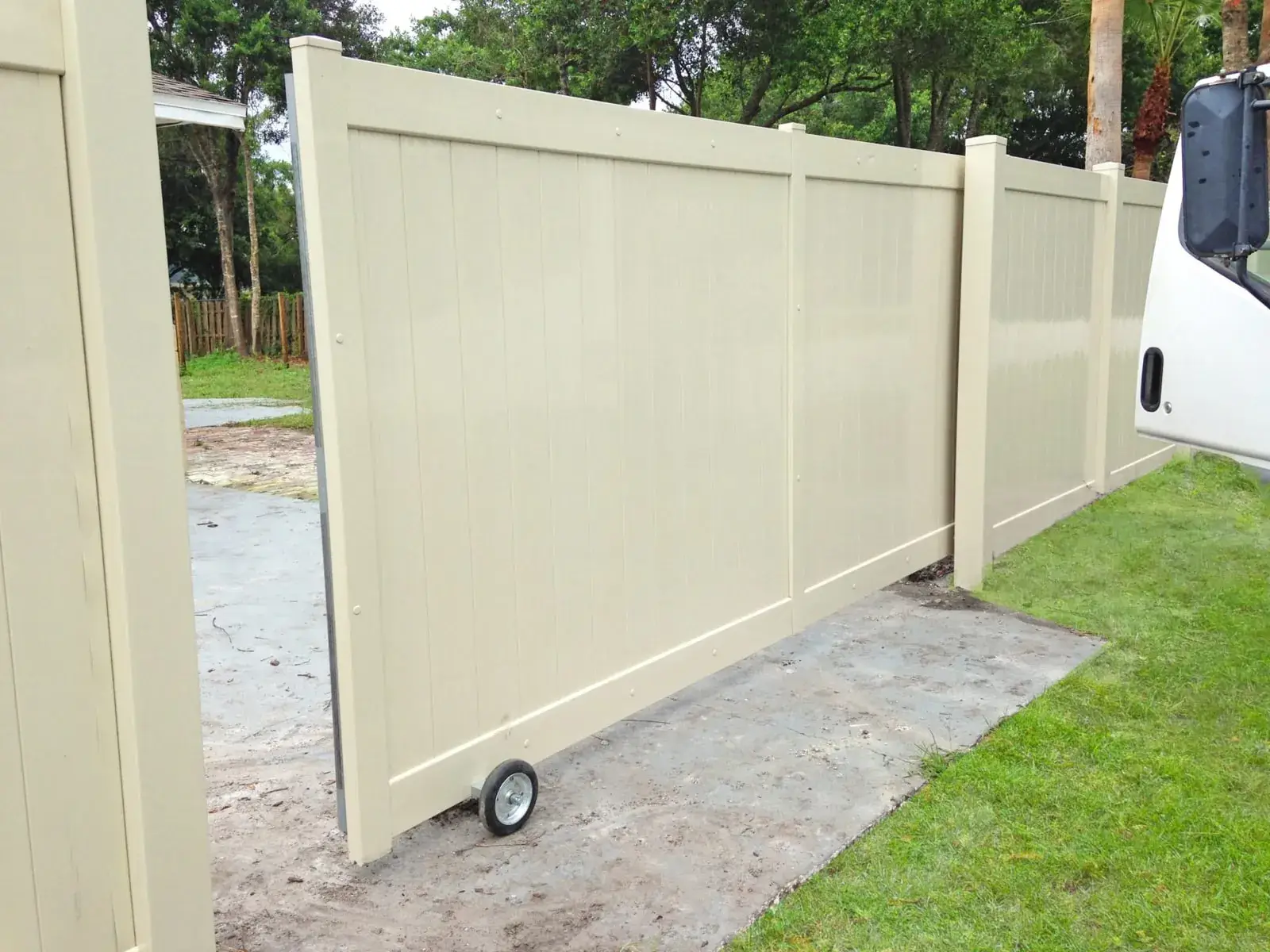
A sliding gate can be a practical option when there is not enough clear room for a swing arc, or when keeping the driveway opening clear matters. It still needs room beside the opening. The run must be long and unobstructed enough for the gate to move, with a suitable travel path and support system.
Track, grade and drainage matter. All County Fence describes sliding gates as a fit for some sloped or tight driveways, while its security-gate guidance says rolling gates need a clear, level path. Those details make the exact gate design and site layout important. A tracked system, a cantilever design and a swing gate solve different constraints; a site check is the right way to decide which one fits.
A quick driveway comparison
| Check | Swing gate | Sliding gate |
|---|---|---|
| Space needed | Clear arc across the driveway | Clear run beside the opening |
| Potential conflict | Parked vehicles, walls, landscaping or grade in the arc | Fence-line obstructions, uneven travel path or limited side room |
| Useful first question | Where will the leaves swing, and will that space stay clear? | Where will the gate travel and park, and is that route suitable? |
| Best next step | Measure the opening and swing clearance | Measure the opening and side run |
What to measure before you request an estimate
- Opening width: note the clear space between the gate posts and what vehicles need to pass.
- Swing clearance: mark the full arc on the side where a swing gate would open.
- Sliding clearance: measure the unobstructed fence-line run where a sliding gate would travel and park.
- Ground conditions: point out slope, drainage, pavement, gravel, leaves or other issues along either path.
- Plans and rules: check HOA requirements and the rules for the exact city or county where the property sits.
Inside City of Orlando limits, the City says driveway gates must be set back at least 20 feet from the property line, and vehicular or powered gates require a permit. Those are City rules, not a blanket rule for every Central Florida address. Check the City of Orlando Fence Guide and the applicable local jurisdiction before choosing placement.
Planning to automate the gate?
Tell the contractor before the gate is built. The operator, frame, access controls and safety devices need to suit the specific gate and site. UL explains that UL 325 addresses safety hazards for electric gate operators and that proper product selection and qualified installation matter. All County Fence says it builds automation-ready gates and coordinates a licensed specialist for the operator. See its gate installation service for residential options, or security gate installation for controlled entrances.