Start with what the fence has to do
Most people start by scrolling photos. It’s faster to start with the job, because each job narrows the field to one or two styles:
- Privacy from neighbors or a busy street: full privacy panels, or shadowbox if you want airflow.
- A pool barrier: pool-code privacy or picket panels with self-closing, self-latching gates.
- Keeping a dog in: full privacy for dogs that bark at everything going by, or picket with tight spacing for calm dogs.
- Curb appeal in the front yard: picket or scalloped picket, kept to the lower front-yard height.
- Marking a property line on a big lot: 2-, 3- or 4-rail ranch fence.
The vinyl fence styles we install
Full privacy (tongue and groove)
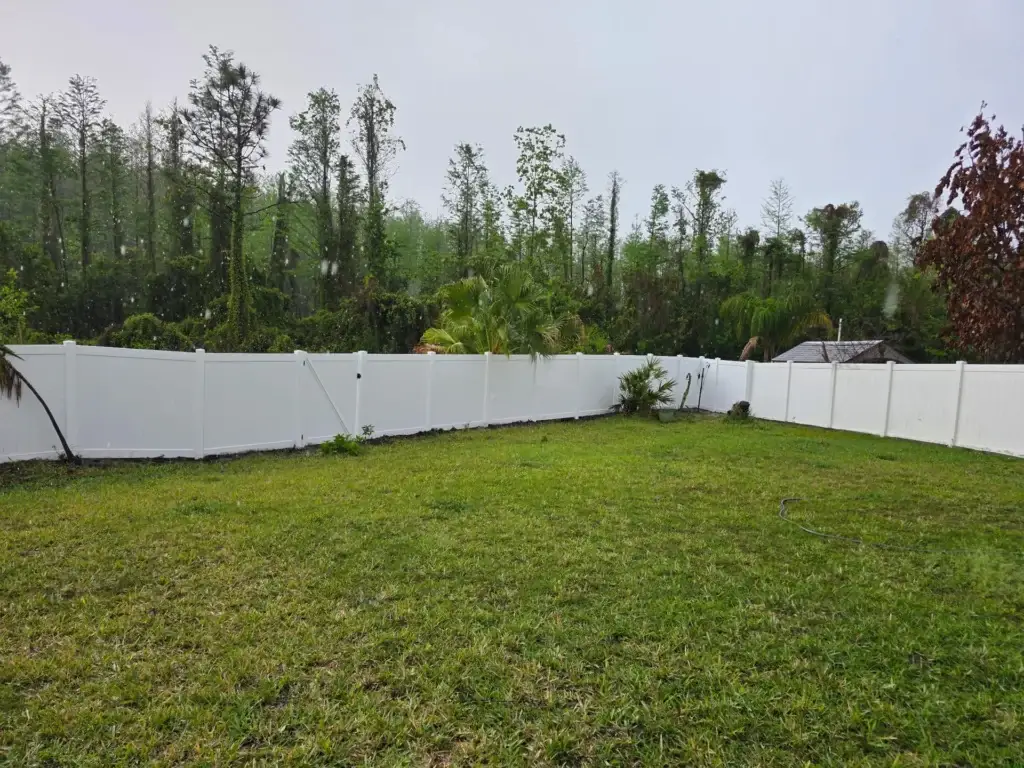
Solid panels with no gaps between boards. It’s the most common choice for backyards and for pools where you also want privacy. Most backyard privacy fences we build are 6 feet tall, the usual limit for rear yards.
Semi-privacy and shadowbox
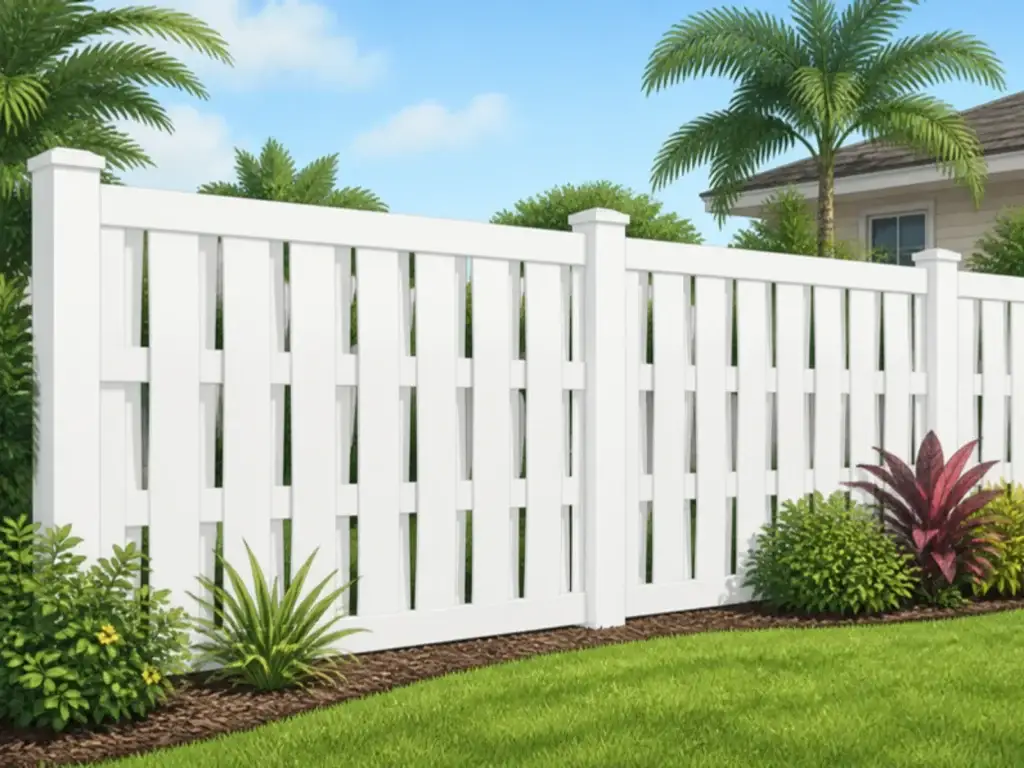
Boards alternate so the fence screens the yard from most angles but lets air and some light through. It’s a good fit where a solid wall would feel closed in, or where you want a breeze across the patio.
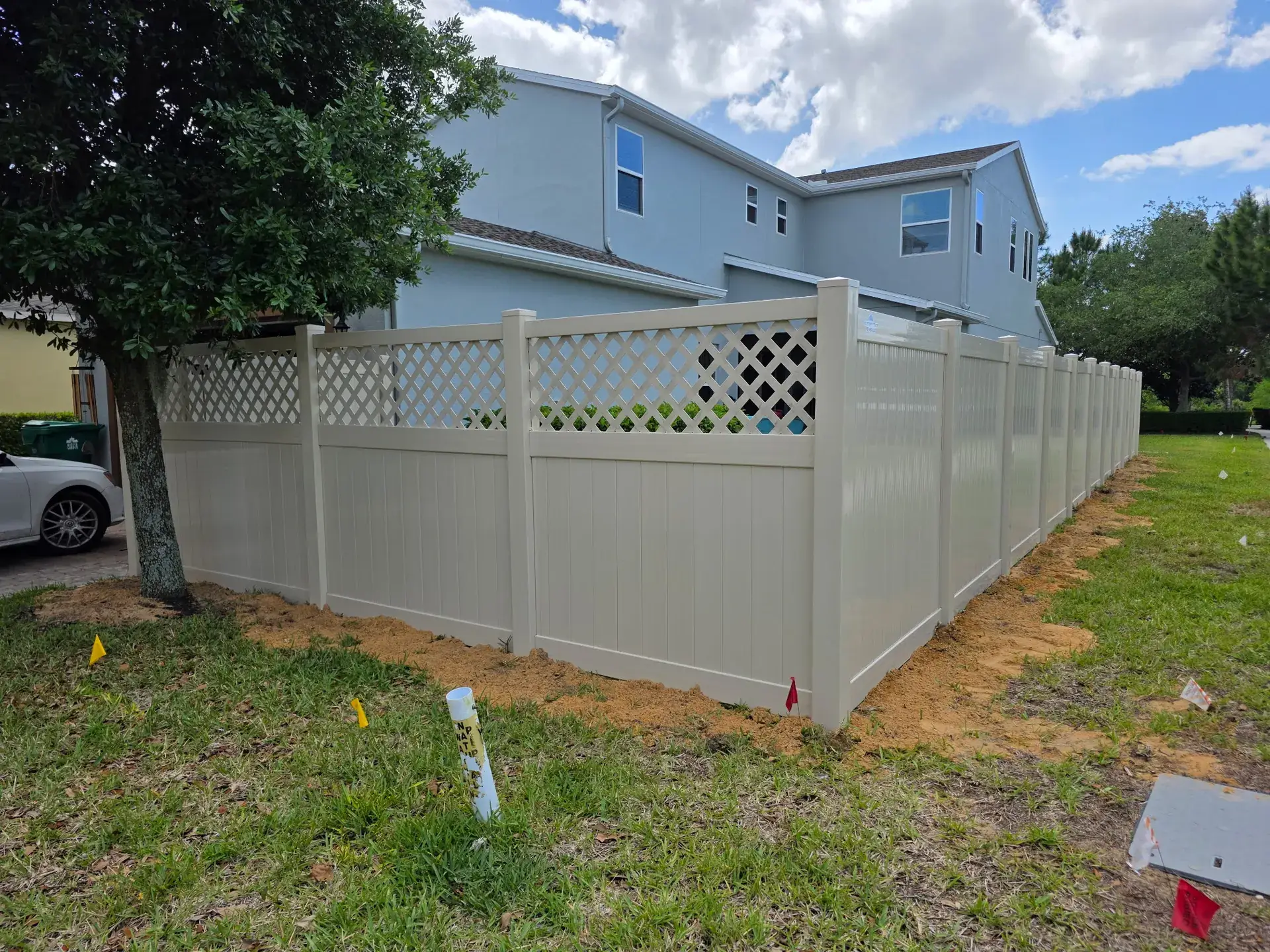
Lattice-top and closed-spindle
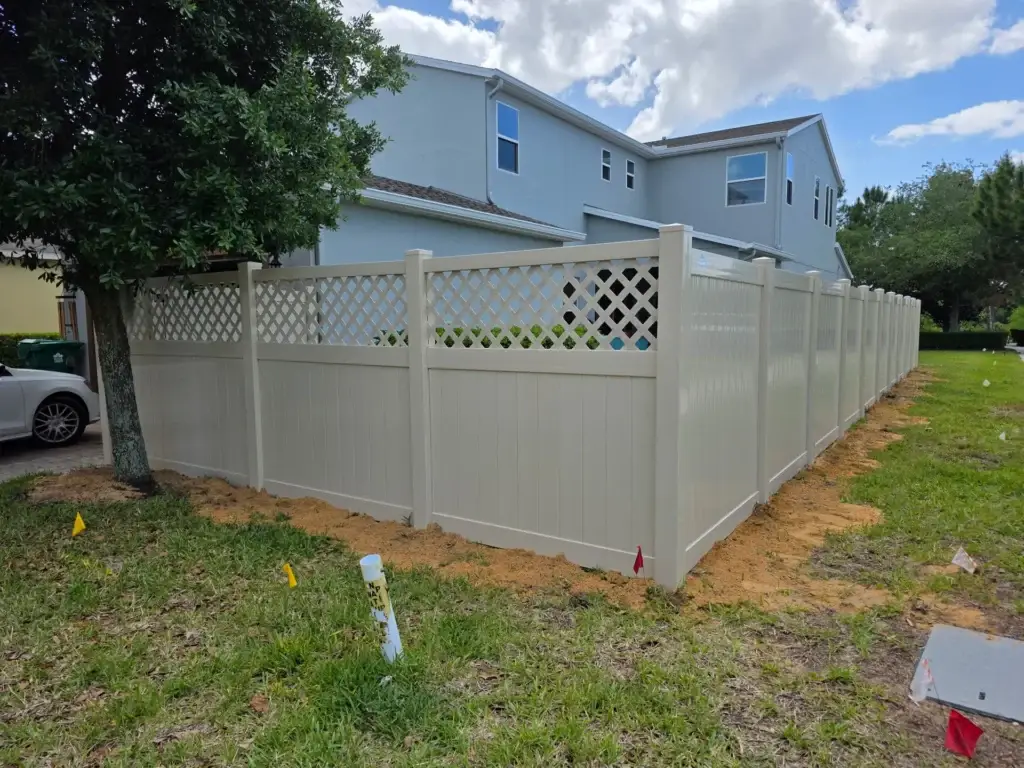
A privacy panel with a decorative band of lattice or spindles across the top. You keep most of the screening and get a softer, more finished top line. It’s a popular choice in HOA communities that want privacy fences to look less like a wall.
Picket and scalloped picket
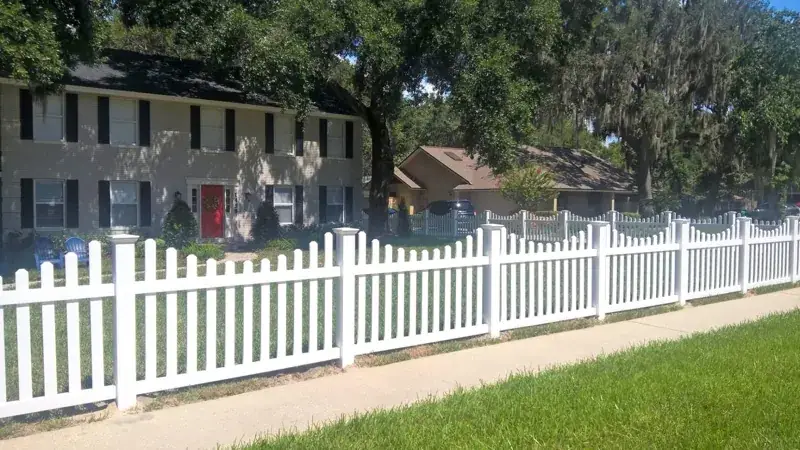
Open pickets for front yards, gardens and around a pool deck. Pickets define the space without hiding the house. If a small dog will be inside it, ask about tighter picket spacing; standard gaps can be wide enough to squeeze through.
Ranch rail (post and rail)
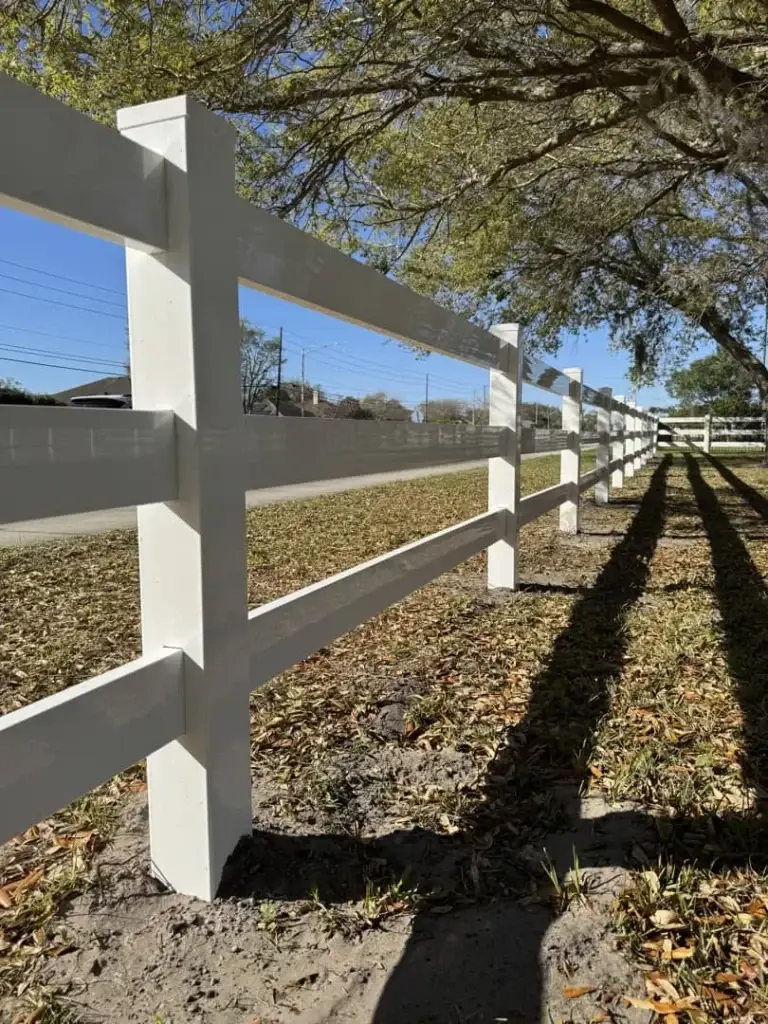
Two, three or four horizontal rails between posts. It marks a boundary and gives a large lot a farmhouse look, but it’s open, so it won’t keep a small dog in by itself.
Pool-code vinyl
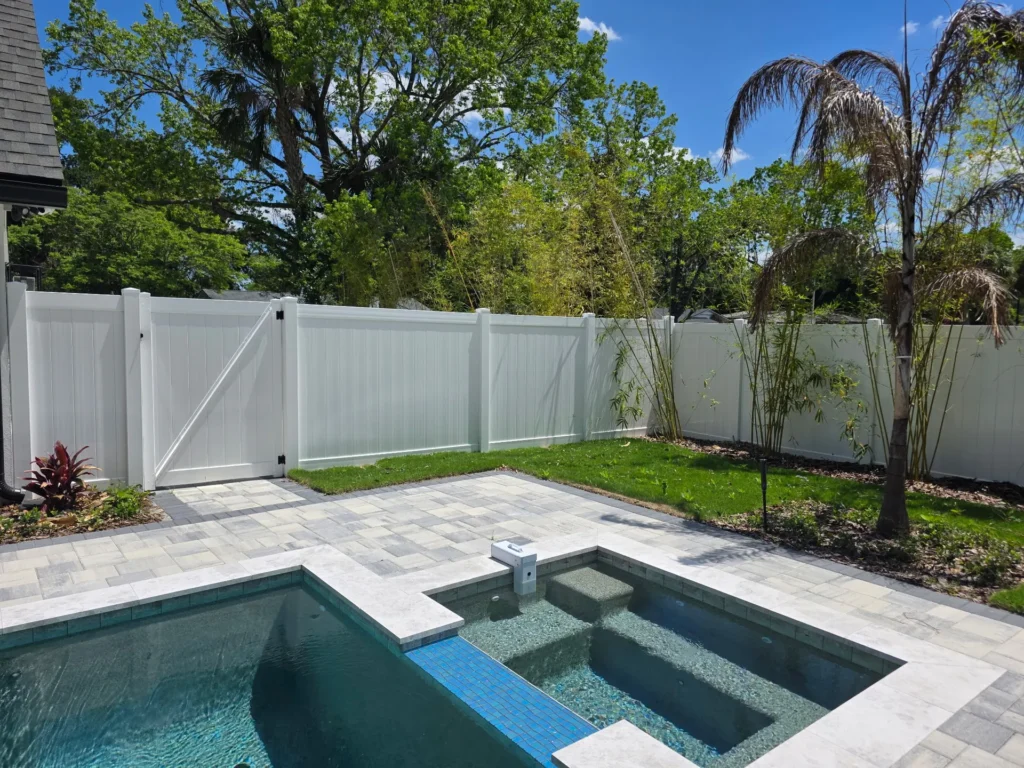
Privacy or picket panels built to Florida’s residential pool barrier rules: at least 48 inches tall, no openings a 4-inch sphere can pass through, and gates that are self-closing, self-latching and open outward, away from the pool. See pool fence installation for the details.
Choosing a height
Height is usually set for you by the city and your HOA, so check both before you fall for a style.
- Backyards: 6 feet is the common limit for rear and interior side yards.
- Front yards: limits are lower and vary by city. Winter Park, for example, allows open picket fences up to 3.5 feet in front yards and painted or decorative pickets up to 3 feet.
- Permits: inside Orlando city limits, a vinyl fence 6 feet or under at a one- or two-family home usually doesn’t need a City permit. Other cities and unincorporated county addresses set their own rules. Our Orlando fence permit guide covers the details, and we handle the permit when one’s needed.
- HOAs: most approve every new fence, often down to the style and color. We supply the drawings and material specs for your application.
Choosing a color
We install vinyl in white, tan (almond), khaki and gray, plus two-tone and woodgrain finishes. White is the classic look; tan and gray sit more quietly against landscaping.
Pick a color you’ll keep. The color runs through the material, which is why vinyl never needs painting, but it also means changing color later isn’t a practical project. If you have an HOA, confirm the color is on its approved list before you order.
Matching gates
Walk gates and double drive gates come in the same styles and colors as the fence, built on aluminum-reinforced frames inside matching vinyl panels so they stay square. For openings that aren’t a standard width, see custom gate installation.
What vinyl styles cost
These are our own installed prices as of September 2026, from 4 feet at the low end to 6 feet at the high end:
- White vinyl privacy: about $23 to $30 per linear foot. A 150-foot backyard runs roughly $3,450 to $4,500 before gates.
- Tan vinyl privacy: about $24 to $34 per linear foot.
- Vinyl gates: about $475 to $500 each.
Picket, ranch rail and decorative tops are quoted per job. See every material side by side in our Orlando fence cost guide, or see the full range on our vinyl fence installation in Orlando page.