What does a fence cost per linear foot in Orlando?
These are All County Fence’s own installed rates, current as of September 2026. They cover materials, labor, post setting and cleanup. They do not include gates or removal of an existing fence.
| Material | Installed, per linear foot | 150 ft project | 200 ft project |
|---|---|---|---|
| Chain link, galvanized | $13 – $16 | $1,950 – $2,400 | $2,600 – $3,200 |
| Chain link, color (black, green, brown) | $16 – $19 | $2,500 – $2,900 | $3,300 – $3,850 |
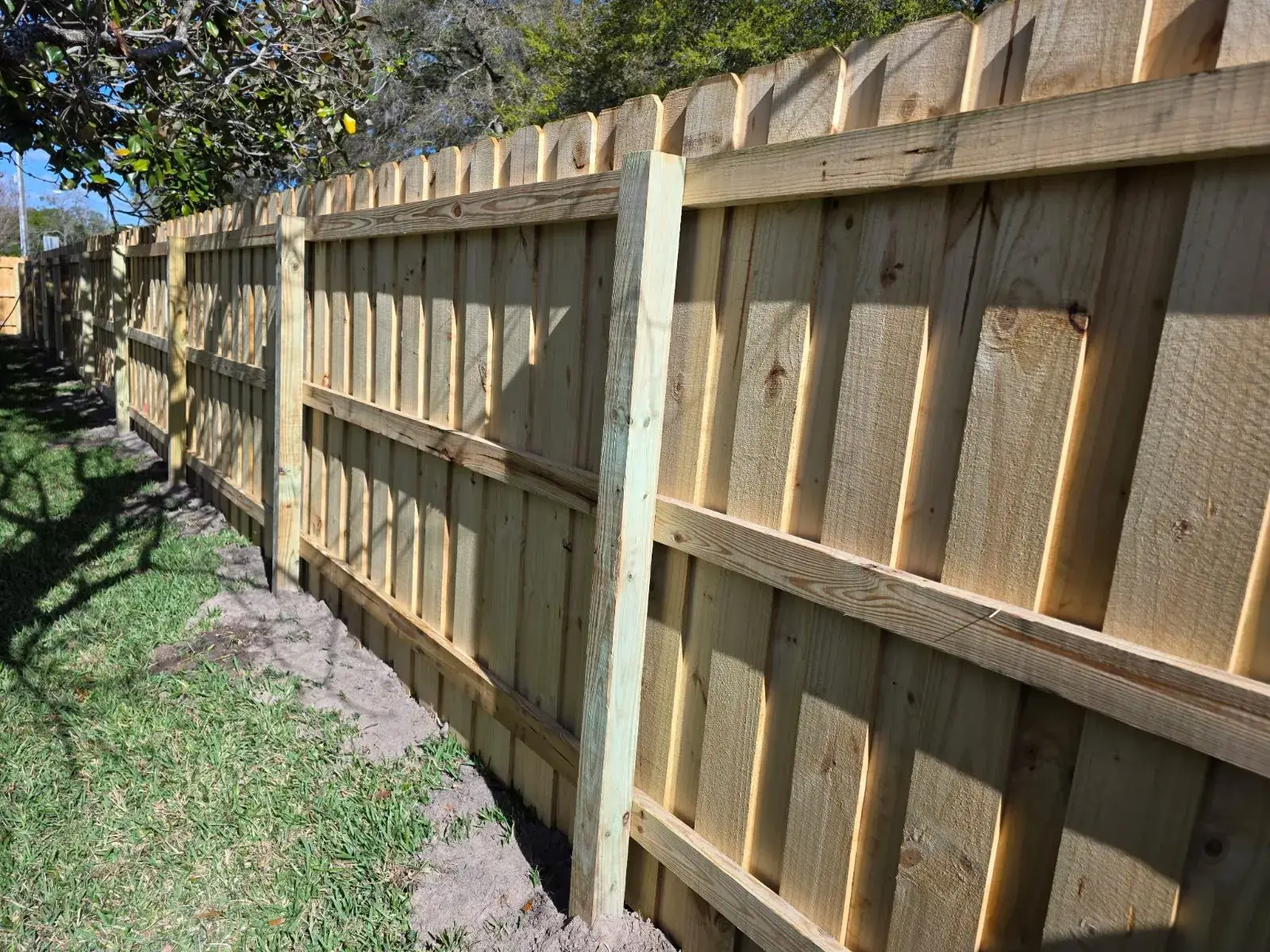
| Wood privacy, treated | $25 – $26 | $3,750 – $3,900 | $5,000 – $5,200 |
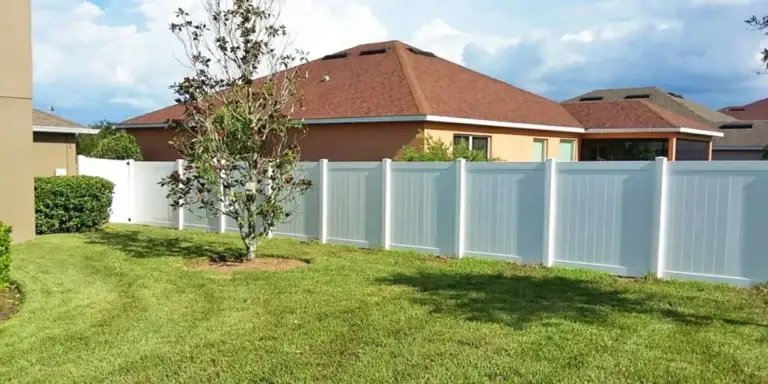
| Vinyl privacy, white | $23 – $30 | $3,450 – $4,500 | $4,600 – $6,000 |
| Vinyl privacy, tan | $24 – $34 | $3,600 – $5,100 | $4,800 – $6,800 |
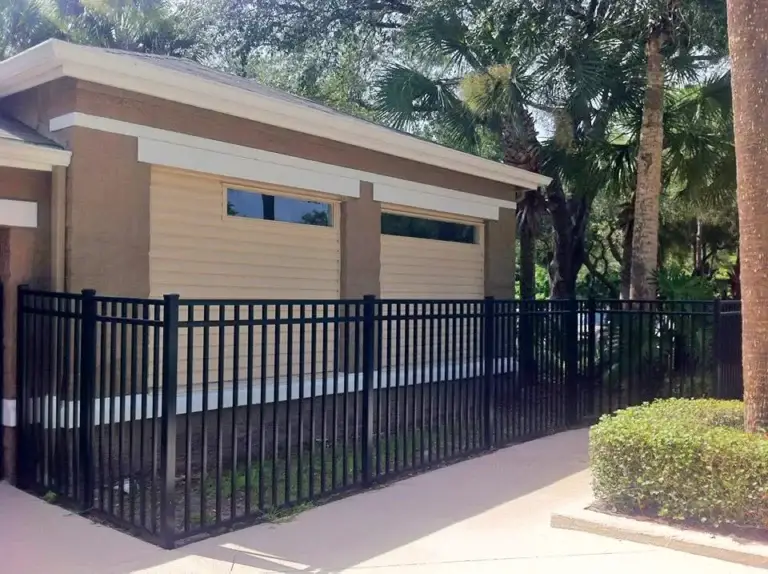
| Ornamental aluminum, 3-rail | $30 – $40 | $4,600 – $5,900 | $6,100 – $7,900 |
Ranges reflect height, from 4 ft at the low end to 6 ft at the high end. Prices as of September 2026.
Gates, each
| Material | Gate price |
|---|---|
| Chain link, galvanized | $250 – $280 |
| Chain link, color | $290 – $325 |
| Wood privacy | $300 |
| Vinyl privacy | $475 – $500 |
| Ornamental aluminum | $525 – $615 |
Old fence removal and haul-away: quoted per job. We do remove and haul away existing fencing, but we don’t publish a per-foot rate for it, because the work varies more than any other line on a quote. Concrete-set posts, chain link grown through by vegetation, and limited access for a truck all change it substantially. We’ll price it when we measure.
Permits: we handle the permit when one’s needed, and the fee is included in your quote. Most residential fences in Orlando don’t need one. See what needs a permit.
Three things about fence pricing that surprise most people
We quote enough of these to see the same reactions. All three come straight out of our own price book.
Color costs more than height on a chain link fence. Galvanized chain link at six feet is cheaper per foot than black chain link at four feet. If budget is the priority and privacy is not, going taller in galvanized costs less than going shorter in black.
A five-foot wood fence costs the same as a six-foot one. Our per-foot rate for treated wood privacy is identical at five and six feet. If you were planning to save money by dropping a foot, you won’t. Build the six unless your HOA or the City’s height limit says otherwise.
The gap between wood and vinyl is smaller than people expect. Six-foot wood privacy runs about 13% less per foot than six-foot white vinyl. Over a 150-foot backyard that’s about $600, against a material that never needs sealing or staining.
How much does 200 feet of fencing cost?
Between roughly $2,600 and $7,900 before gates, depending on material and height.
- Galvanized chain link, 4 ft: about $2,600
- Color chain link, 6 ft: about $3,850
- Treated wood privacy, 6 ft: about $5,200
- White vinyl privacy, 6 ft: about $6,000
- Ornamental aluminum, 6 ft: about $7,900
Add two gates and you’re adding roughly $500 to $1,230 on top, depending on material.
What pushes a 200-foot job above these numbers:
- Sloped or uneven ground, which needs racked or stepped panels
- Tree roots along the fence line
- Limited access for equipment and material, common on tight Orlando side yards
- Old fence removal, quoted per job
Why is my quote different from an online estimate?
Online fence calculators price an average lot in an average market. They are not pricing your yard.
What actually decides a quote: total footage, material and gauge, panel height, gate count and size, ground conditions, equipment access, whether an old fence is coming out, and whether the job needs a permit.
There’s also a quality variable most quotes never show you. Where a competing bid comes in materially cheaper, it’s almost always one of four things: less concrete per post, thinner material gauge, wider post spacing, or a lighter grade of material. None are visible once the fence is built, and all of them shorten its life.
Ask every contractor for post depth, concrete per post, post spacing and material gauge in writing, then compare. We’ll put ours in writing without being asked: two feet deep, a full 50 lb bag per post, and a 5-year workmanship warranty on the installation.
How deep do you set fence posts in Orlando?
We dig post holes two feet deep and set every post in a full 50 lb bag of concrete mix. With water added that’s about 60 lbs of concrete in the ground per post.
The bag count is the number worth asking about. Two feet is the standard burial depth for a six-foot fence, and most reputable installers will quote something similar. What varies enormously between bids is how much concrete actually goes in the hole. A full bag per post is a real cost. Cutting to half a bag, or backfilling with tamped dirt and a collar of concrete at the top, saves a contractor money on every single post and is completely invisible once the fence is standing.
This matters more in Central Florida than most places. Sandy soil gives less lateral resistance than clay, and a solid six-foot privacy panel behaves like a sail in a summer storm. Fences here usually fail at the post, not the panel.
So when you compare quotes, ask each contractor two questions: how deep, and how much concrete per post. Get both in writing. Ours is two feet and a full bag.
Is it cheaper to repair or replace a fence?
Once posts start failing along a run, replacement is usually the better value. Patching one leaning post on a fence whose neighboring posts are the same age, in the same soil, carrying the same load rarely buys much time. Replacement removes the old fence, resets posts on the same line and restarts the clock.
A note on scope: All County Fence installs and replaces fences, and repairs the fences we built. We don’t take on repairs to fences installed by other companies. If your existing fence is failing and it wasn’t ours, replacement is the conversation we can help with. More on fence replacement.
Which fence gives the most value in Central Florida?
Cheapest to buy and cheapest to own are different questions here.
Chain link is the lowest cost per foot of anything we install and gives no privacy at all. Best for pet runs, large perimeters and budget-driven jobs.
Wood is the cheapest way to get full privacy, and the most expensive to maintain. Humidity, sun and afternoon storms are hard on it, and it needs sealing or staining on a cycle.
Vinyl costs a little more up front than wood and far less to keep. It doesn’t rot, warp or host insects.
Ornamental aluminum is the most expensive per foot and the least demanding over time. Powder-coated, won’t rust, which is why it has largely replaced wrought iron in Florida.